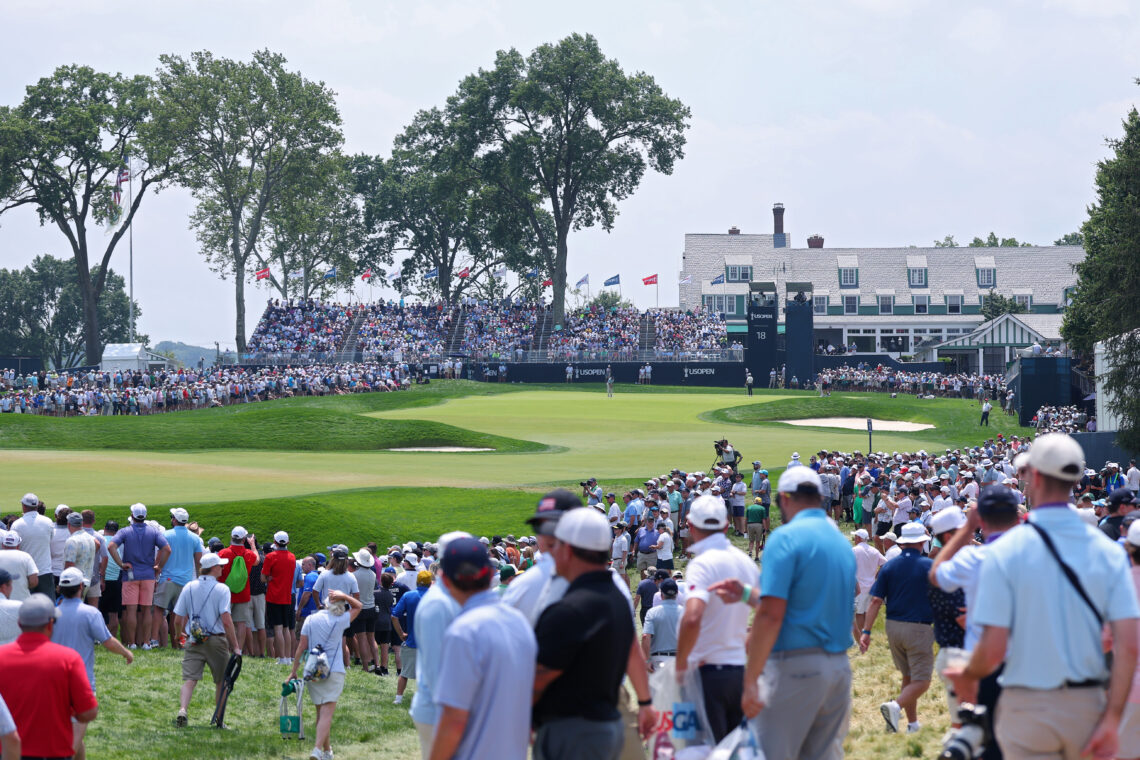

There will be plenty of players who are more than happy that their week at Oakmont is over.
Oakmont took no prisoners during the 125th US Open, with eventual winner J.J. Spaun the only player who ended the week under par.
J.J. Spaun won the US Open at Oakmont after shooting rounds of 66, 72, 69, 72.
The US Open was a real war of attrition for the most part last week, and in all fairness, that’s exactly how it should be.
As an idea of how difficult the golf course played, a one-handicap golfer shot 93 around Oakmont on Monday, the day after the US Open had finished.
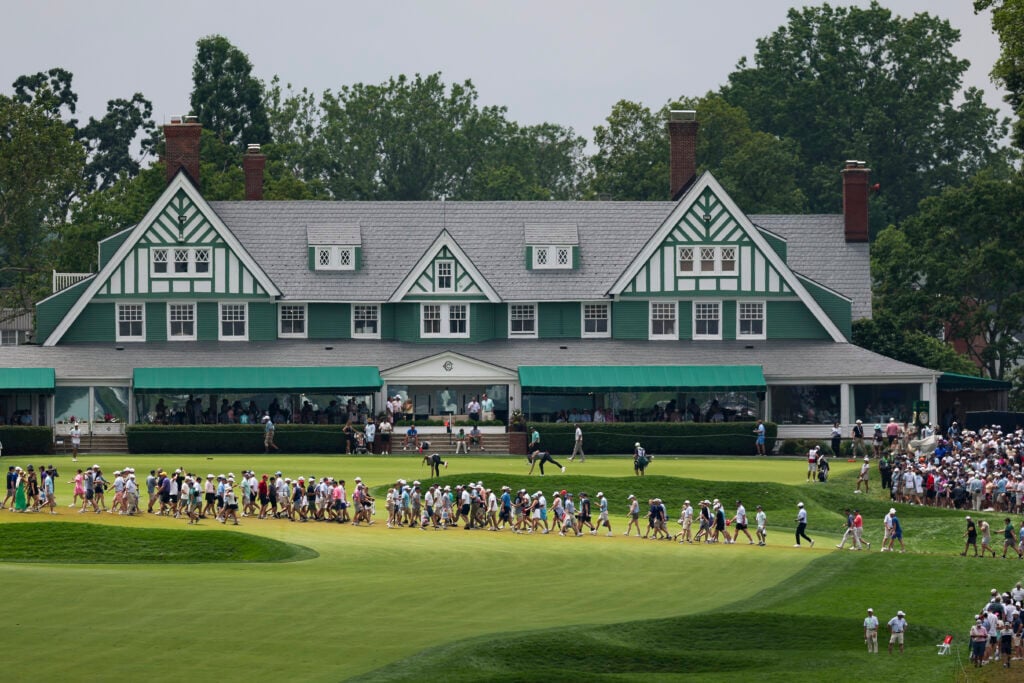
The USGA will undoubtedly be very proud that the finishing score ended up being one-under. They always aim for the victor to win their national championship at somewhere around even-par.
However, the question on everyone’s lips is: was it a fair test of golf at Oakmont?
USGA blasted for flaw in Oakmont setup which ended one player’s hopes of winning the US Open
Oakmont in US Open mode is an acquired taste.
Some golf fans love watching the pros struggle while others want to see more skill required, rather than players hacking their ball out sideways from the rough.
But what does an expert think about the way the USGA set up the course at Oakmont?
Peter Kostis – a famous golf coach and TV analyst – took aim at one very specific flaw made by the USGA regarding the Oakmont setup for the US Open.

He said, “Now that the US Open is over, a couple of unrelated thoughts. 1st, congrats to JJ Spaun! What a terrific story of perseverance being rewarded. 2nd, why would you build such severe slopes around bunkers that make it almost impossible for a player to get a stance and then grow rough on those slopes (USGA set-up) that prevent the ball from going into the bunker? In the UK courses have small pot bunkers that play really big because balls can roll into them from 25 yards away. Here we build huge bunkers and surround them with rough that keeps the ball from finding the sand unless you fly it in….. Doesn’t make much sense to me.“
Kostis is spot on here. What is the point in having bunkers in the first place if they are all surrounded by a dense barrier of six-inch long rough?
The setup flaw could well have actually ended Tyrrell Hatton‘s hopes of winning the tournament, after his drive on the 17th hole got entangled in the rough on the downslope, rather than fall into the green-side bunker.
Hatton wasn’t keen on the deep rough surrounding the bunkers at Oakmont, and he made that very clear to reporters after his final round.
US Open field stroke average at Oakmont by round
Oakmont was a beast, it truly was.
Had there been no rain, and if the golf course was playing hard, firm and fast, anything from four-eight over could have won the tournament.
Even with soft conditions though, the players struggled throughout the week.
| Round | Average score of the field |
| 1 | 74.64 |
| 2 | 74.79 |
| 3 | 72.67 |
| 4 | 73.19 |
| Overall | 74.18 |
Now those numbers are slightly misleading.
The most difficult conditions clearly came during round four, but it is worth remembering that the first two rounds include scores from all 156 players, and a lot of them endured miserable weeks.
For example, George Duangmanee finished dead last at Oakmont with a two-round total of 35-over par!
Perhaps there were certain flaws in the setup at Oakmont, but overall the Henry Fownes design provided an extremely good test for a US Open.
Receive exclusive golf news and updates twice a week to your mailbox