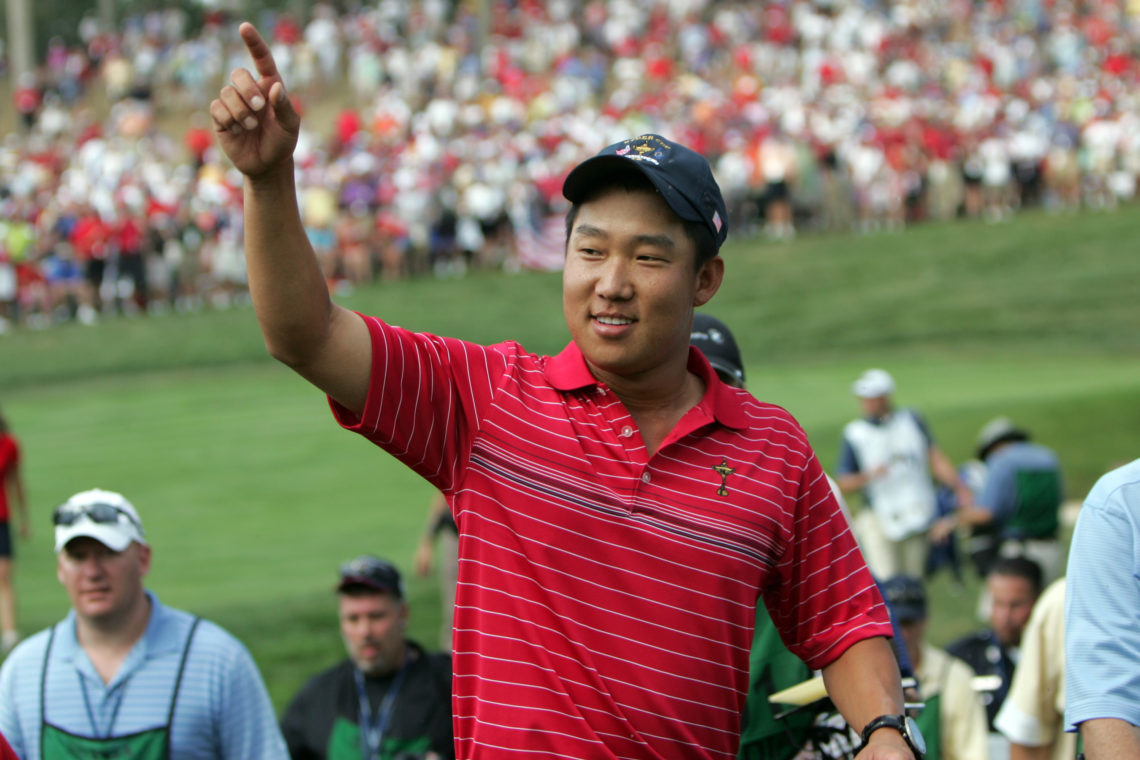

Anthony Kim made one Ryder Cup appearance in 2008. The USA prodigy helped Paul Azinger’s side to a memorable 16/5-11.5 victory at Valhalla.
Of course, back then, Kim was the next big thing on the PGA Tour before he eventually vanished into the golfing wilderness. Fourteen years ago, Kim, along with 23 other players, played for free and purely for the love of the Ryder Cup.
Unfortunately, as has been well documented, a unique scenario will now emerge at next year’s event at Bethpage Black. USA players will be paid $500,000 each, with $300,000 going to charity and the remaining $200,000 being labelled as a “stipend”. Essentially, they can do as they please with it.
Keegan Bradley will give his $500,000 to charity, but it remains to be seen what the likes of Patrick Cantlay – who supposedly protested in Rome – will do with their earnings should they make the team.
Anthony Kim reacts to USA Ryder Cup payments
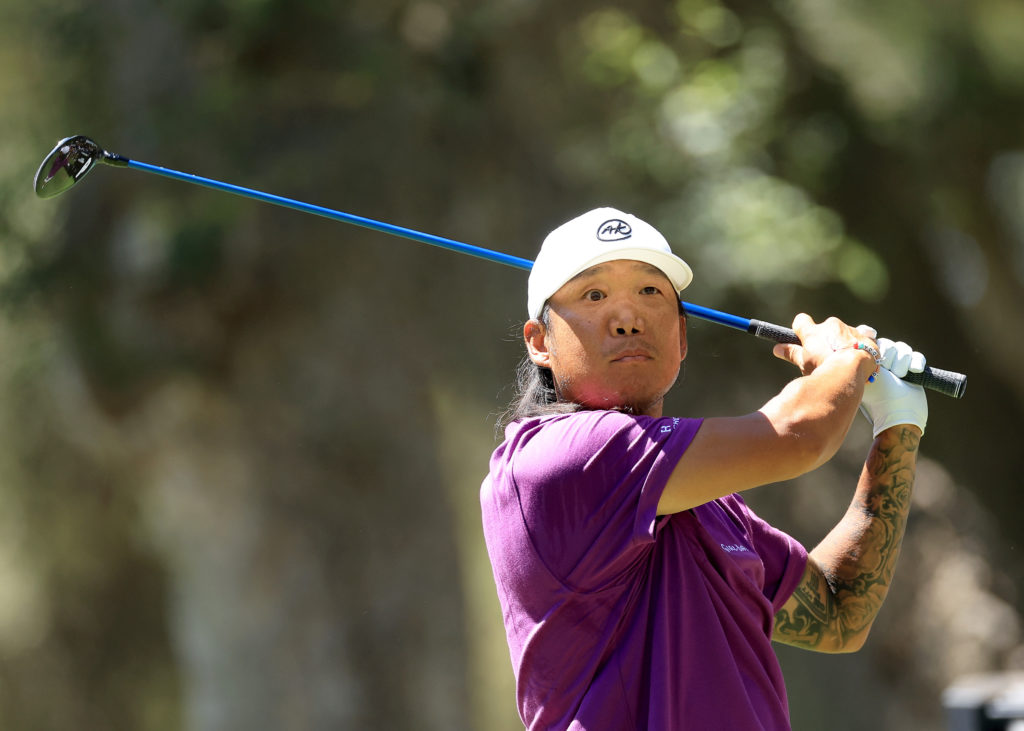
Kim, who is currently looking to resurrect his career on LIV Golf, is never afraid to let his opinions known – particularly on social media.
And unsurprisingly, the American has offered his full backing to those players who want to receive payment for competing in the Ryder Cup.
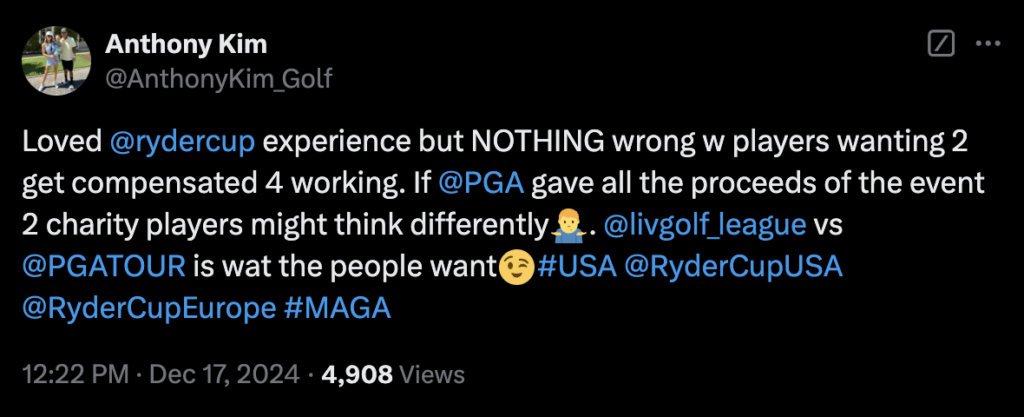
“I loved the Ryder Cup experience, but there is NOTHING wrong with players wanting to get compensated for working,” Kim wrote.
“If @PGA gave all the proceeds of the event to charity, players might think differently. @livgolf_league vs @PGATOUR is what the people want.”
USA players can turn the Ryder Cup saga into a PR victory
Right now, if the 2025 Ryder Cup team accept the $200,000 payment, those on the European side will use the saga to their advantage. The ‘greedy Americans vs the passionate Europeans’ will be the narrative right up until the first ball is struck at Bethpage Black.
Yet, if all the USA players donated their wages to charity, they would receive little criticism. In fact, the saga would be turned into a PR victory.
Just imagine Cantlay confirming his $500,000 would be heading to charity; the European media would see their headlines immediately go up in smoke.
To effectively address the ongoing debate leading up to the Ryder Cup, Bradley could engage with top USA players to forge a unified stance. By collectively deciding how to approach the stipend and making a joint announcement, they can tackle criticism and reshape the narrative.
Receive exclusive golf news and updates twice a week to your mailbox