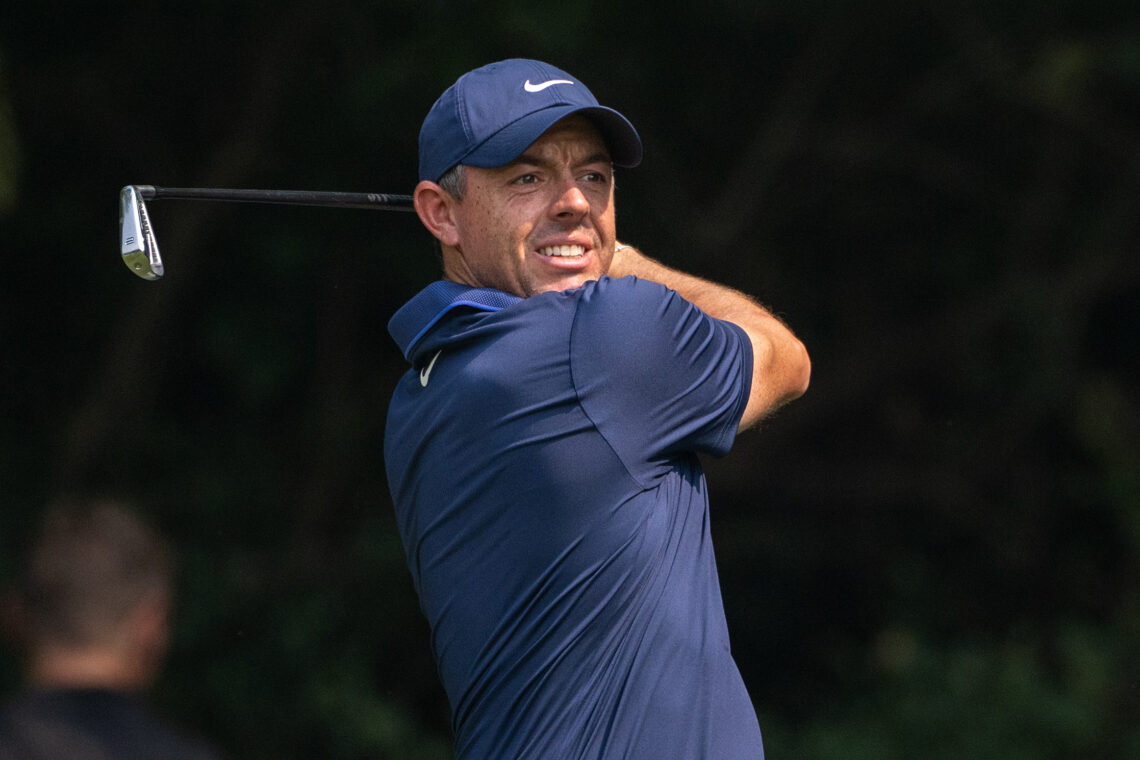

Rory McIlroy has faced more mental hurdles than most athletes in his professional golf career.
From his meltdown at the 2011 Masters to his missed putt at the 2024 US Open, he knows what it’s like to succumb to the pressure of elite sport.
But the Northern Irishman has also proven time and time again that he can overcome adversity to achieve great things.
McIlroy will probably never have been more nervous than he was during the epic final round at The Masters this year.
Speaking after he won the Green Jacket, McIlroy shared some excellent advice on how to deal with nerves on the golf course.
- READ MORE: Rory McIlroy did something ‘weird’ during the 2024 Masters which infuriated Sir Nick Faldo
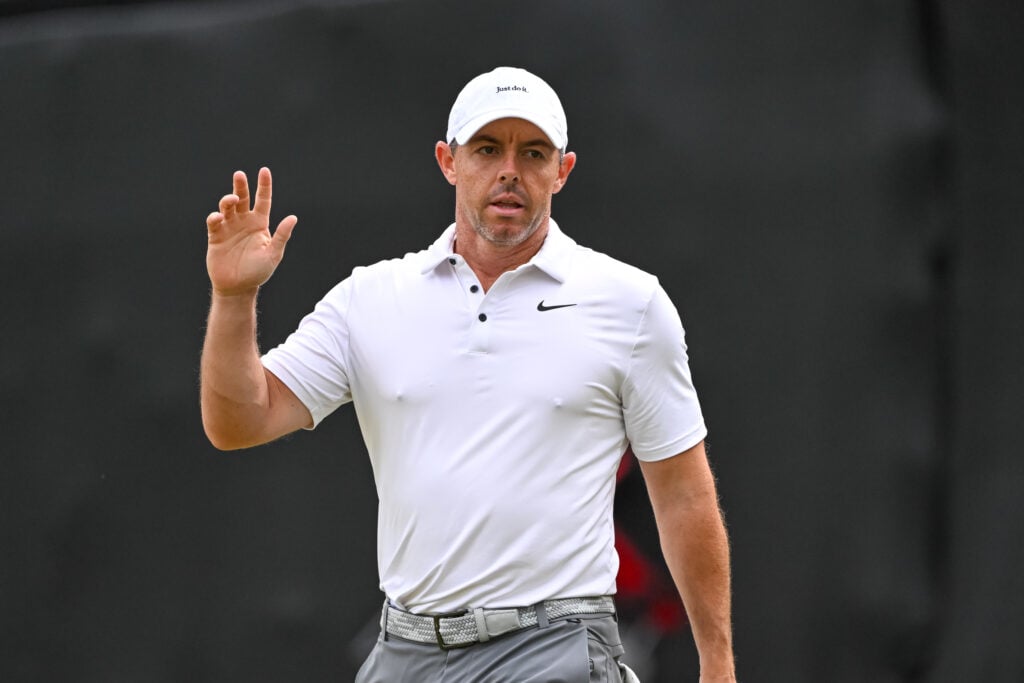
Rory McIlroy’s advice on dealing with nerves on the golf course
McIlroy admitted that he has struggled with nerves, especially on the first tee, throughout his golfing career.
However, he has developed a “counterintuitive” way of conquering those nerves and allowing him to feel more relaxed.
McIlroy explained: “I say this all the time; it’s counterintuitive for a lot of people to do this, but if you’re trying to overcome anxiety or nerves around performance, I do try to think, ‘What’s the worst that could happen?’
“I’m not going to die on the golf course, thankfully. I used to have first tee nerves, big time. I would struggle on the first tee. So, I would say to myself, ‘What’s the worst that can happen?’
“If you hit it into the trees, what do you do? Well, you go up there and you figure it out. You’re skillful enough to hit a punch shot out of the trees and get it up to the green and get it up-and-down, make a par, and move on.
“For whatever reason, imagining the worst-case scenario gives me a level of comfort because I feel like any worst-case scenario that I can bring up in my head, I’ll be able to deal with, especially on the first tee.
“If you get nervous on the golf course, you get tight and ‘guidey’, so it gives me a sense of freedom. If I can swing freely, that’s when I play my best golf, so whatever thought process I need to get into to get there, whether that’s imagining the worst-case scenario… But I also have positive reinforcement.
“I’m not standing behind a tee shot and visualizing myself hitting a bad shot. I’m visualizing myself hitting it where I want to, but even before I get to that point, I’m thinking, ‘What’s the worst that can happen? If the worst that can happen isn’t that bad, then it’s like, ‘Well, that’s okay.”
- READ MORE: The driving tip Tommy Fleetwood has for amateurs to help them become more like Rory McIlroy

Amateur golfers should listen to Rory McIlroy’s great advice
Most amateur golfers will have experienced the effects of visualization on the golf course without even realizing it.
How many times have you told yourself not to hit it into the trees or the water, and then done exactly that? Probably, more than you would like to admit.
And the next worst thing you can do is to lose your mind over the mistake you just made. We’ve all done that, too.
This is where McIlroy’s advice comes in. He suggests that amateur golfers accept the reality that the worst-case scenario is never the end of the world.
This perspective will not only allow you to remain composed when mistakes occur but also help to prevent them from happening in the first place.
After all, everyone knows that you play your best golf when you’re not worried about ‘swing thoughts’ or what could go wrong.
So, next time you’re on the course, take McIlroy’s advice and don’t be afraid of hitting a bad shot, and visualize hitting a great one right before you swing.
Receive exclusive golf news and updates twice a week to your mailbox