Ben Hogan is widely regarded as the best golfer of the 1950s and one of the greatest of all time.
He won 64 PGA Tour events, including nine major championships, but his impact was far bigger than his individual success.
Hogan revolutionized the game with his theory on the golf swing, and Gary Player called him the purest ball-striker ever.
However, Hogan was more impressed by another golfer in his era, who even had the game to be the GOAT.
This player’s only issue was that he lacked the golfing intelligence to be more dominant than he already was.
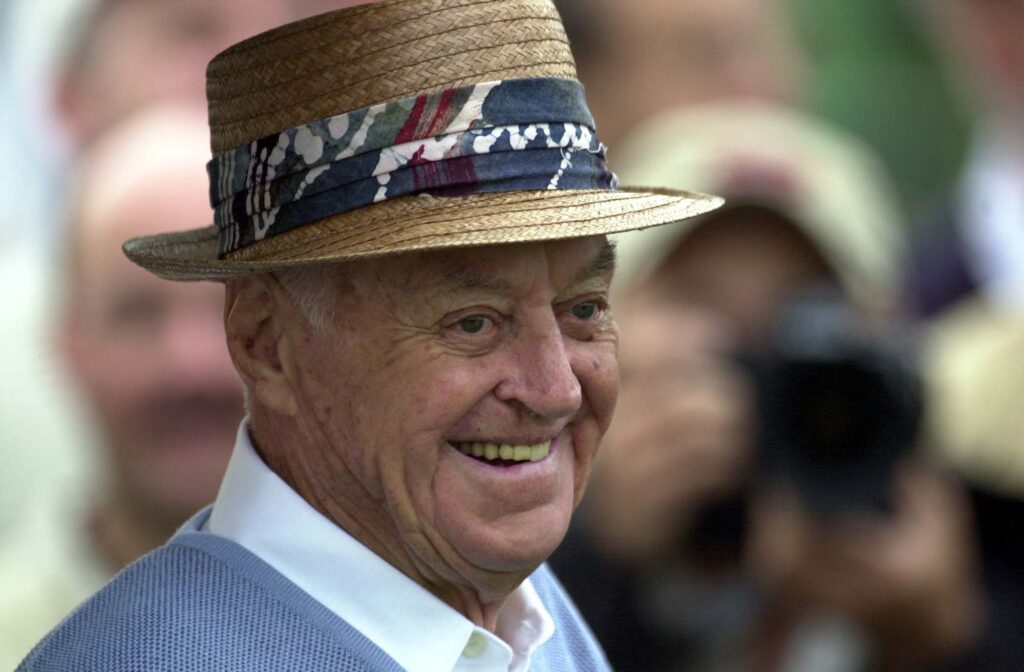
Ben Hogan admired Sam Snead’s golf swing but not his brain
Sam Snead is already recognized as a golfing legend, but Ben Hogan believed that he should have been even better.
“Hogan was convinced Sam had the finest swing of anyone who played the game,” golf historian James Dodson said.
In Hogan’s opinion, the reason Snead did not win more than his 82 PGA Tour titles and seven majors was his lackluster course management.
How long should an 18 hole round of golf take?

“Sam doesn’t know a damn thing about the golf swing,” Hogan claimed, according to Curt Sampson, author of the “Hogan” biography.
“But he hits the ball better than anyone else. If he could have played golf with my brain, he would be the only name in the record book.”
We will never know how much success Snead would have had with a more sensible approach, so we will just have to take Hogan’s word for it.

The USGA banned Sam Snead’s putting stroke
As well as his extraordinary golf swing, which earned high praise from Ben Hogan, Sam Snead also had an interesting putting stroke.
Snead used a croquet-style putting stance throughout his career, standing behind the ball with the hole directly in front of him.
What is the one golf rule you would change if you had the opportunity?

He would hold the putter with his right hand at the top of the grip and his left halfway down the club, and make a forward stroke rather than right-to-left.
However, Snead’s unique technique on the greens, which worked well during his playing days, was eventually banned by the United States Golf Association (USGA) in 1968.
Receive exclusive golf news and updates twice a week to your mailbox