
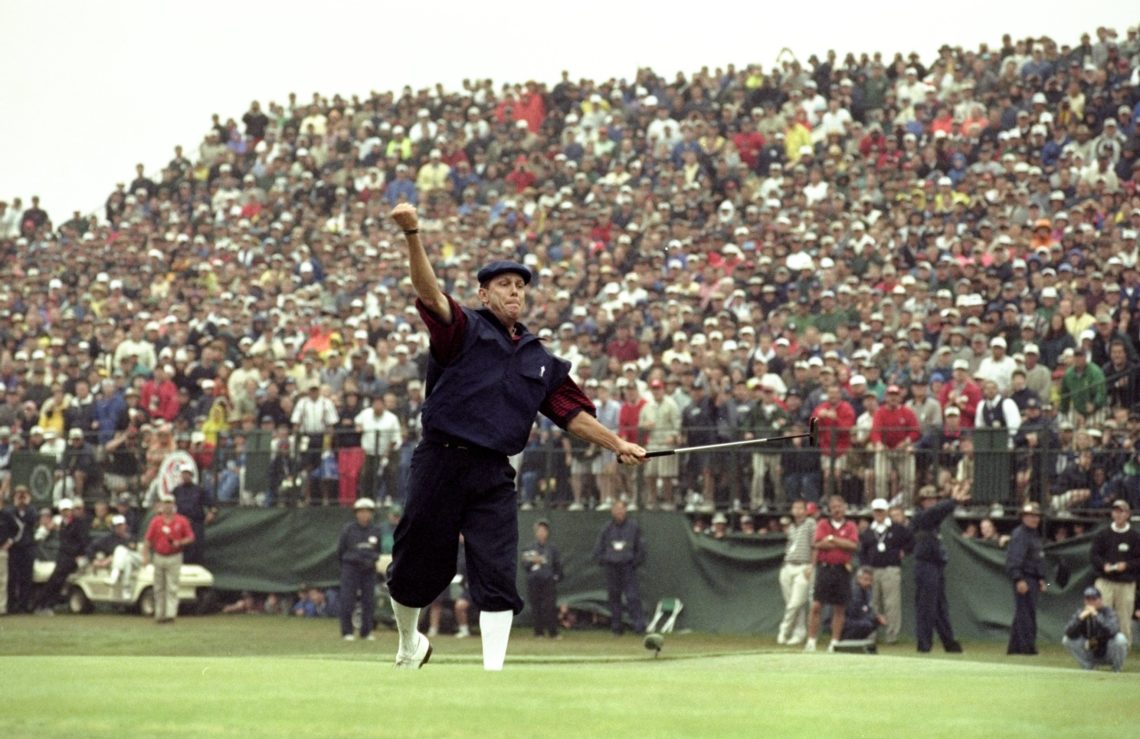

Now the PGA Championship has been and gone, attention will turn to the U.S. Open at the notorious Pinehurst No.2.
The North Carolina course is one of the United States’ most treasured venues, having held three previous U.S. Open Championships in 1999, 2005 and 2014.
Furthermore, No.2 has also held the U.S. Women’s Open in 2014 and is set to do so once more in 2029. Finally, the prestigious U.S. Amateur Championship has been held at Pinehurst in 1962, 2008, and 2019.
Essentially, when it comes to the pinnacle of golf in the U.S., look no further.
The most recent U.S. Open took place in 2014, with German Martin Kaymer securing a brilliant eight-shot victory over Rickie Fowler. Pinehurst No.2 showed its teeth ten years ago, with only three players finishing under par.
What made The 1999 U.S. Open interesting could have an impact in June
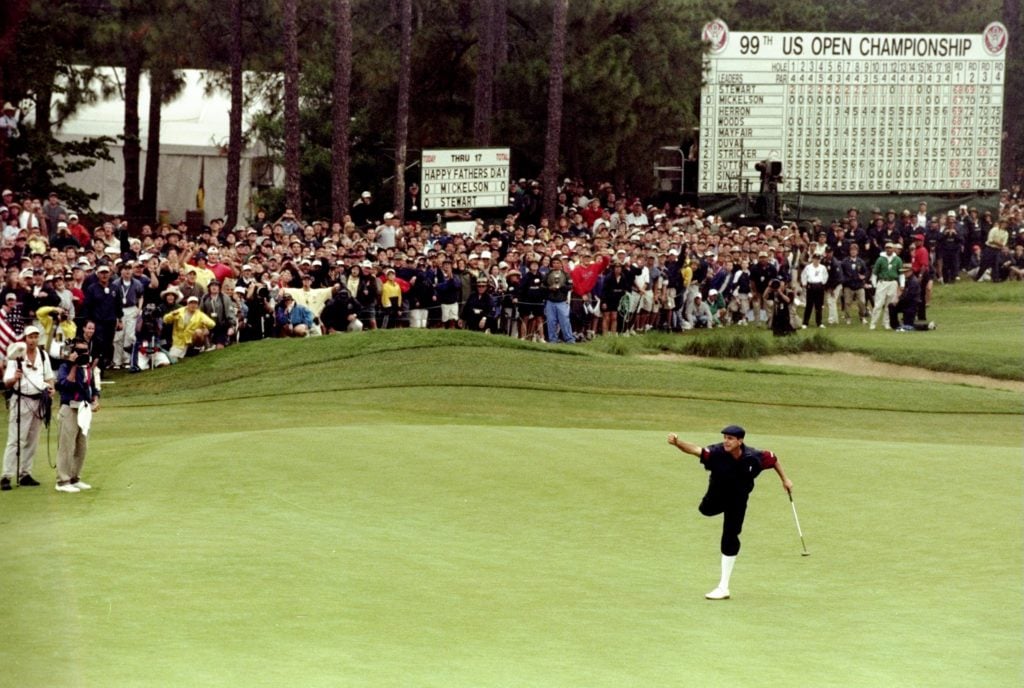
The 1999 U.S. Open saw Payne Stewart take the title on one-under-par, one shot clear of Phil Mickelson, and two shots clear of Tiger Woods.
No.2’s difficulty was abundantly clear 25 years ago.
When the likes of Woods and Mickelson – in their prime – failed to break par, the course was clearly playing extremely tough.
Tom Watson, after his round in 1999, told ESPN the reason why the North Carolina course was so challenging.
He said after carding a 77: “It’s not the hardest course I’ve ever played, but it’s the hardest to get it close to the hole on the green.”
Bob Burns also highlighted Pinehurst’s undulating greens.
“I went 18 straight holes without hitting a green,” Burns said. “I mean, I hit some, but they didn’t stay on. It was amazing. “It’s a fun golf course, but most golf courses lose their fun when the USGA gets hold of them.”
On Pinehurst’s difficulty, Tom Lehman added: “It’s such a demanding course I’m still nervous on the first tee, even though I’m so far back.”
There’s a reason Phil Mickelson played well at Pinehurst No.2
Pinehurst will be a completely different test of golf compared to Valhalla’s soft and favourable conditions.
If the USGA play it right, there’s the chance to take the U.S. Open back to its brutal best. Those with elite short games could thrive in the year’s third major; it’s no coincidence Mickelson was in contention in 1999.
The now-LIV Golf star also finished T28 in 2014.
With the modern game centred around big hitting in soft conditions, testing out the best player’s work around the greens is a must.
Golf is so much more than bombing the ball 300 yards every single hole.
Receive exclusive golf news and updates twice a week to your mailbox