


Most amateurs can only dream of becoming scratch golfers. Currently, only two percent of players have a handicap of 0.0 or below.
The ability to avoid any significant mistake is one of the key areas where scratch players separate themselves from the rest. A golfer with a handicap of 0.0 will make, on average, under one double-bogey per round. A 10-handicap player will make 2.9, and a 20-handicap will make around 6.6.
Clearly, it’s not about making tonnes of birdies. Accepting bogey as a good score is arguably the most important thing for those dreaming of reaching low single figures.
Consistent technique is an essential factor in reducing mistakes. Whether it’s doing the basics on the driving range or improving chipping around the greens, there are fundamentals which will help.
Tiger Woods’ former coach shares what amateurs must eliminate
For amateur players, duffing a chip near the green is the most infuriating feeling. All the hard work accomplished hitting the green is undone by a shot which ends up just inches in front of the club head.
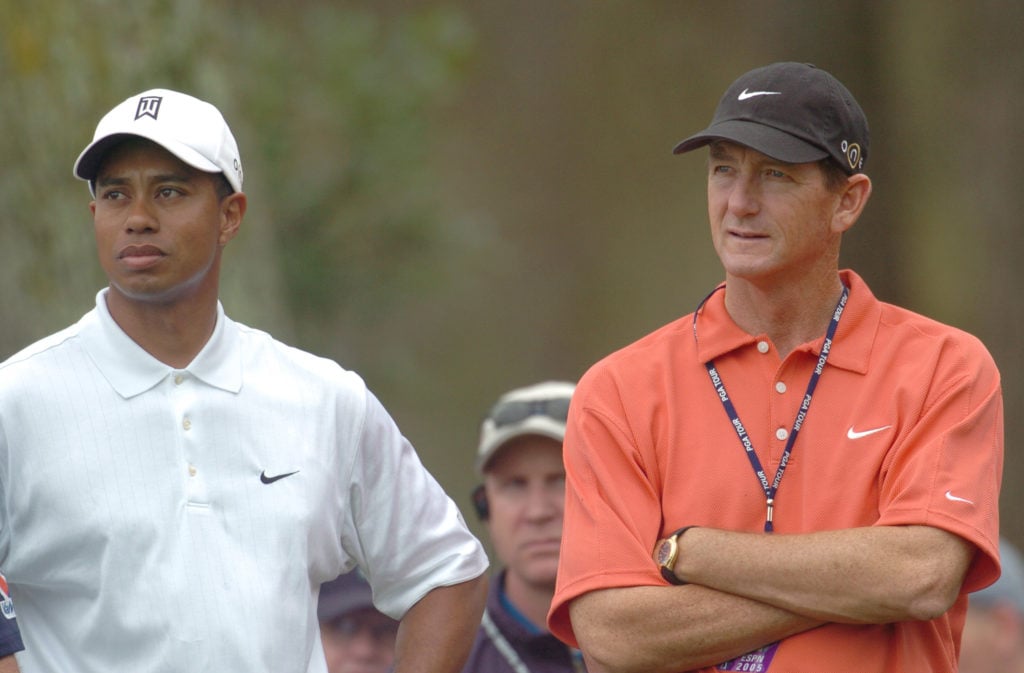
Tiger Woods’ former coach, Hank Haney, says eliminating extra chip shots and penalty strokes are the first steps high handicap players must take.
“Eliminate penalty shots and two chips,” Haney wrote on X.
Improving the consistency of strike around the greens should be the first step amateur players take when looking to reach low single figures.
How often do scratch golfers putt for par?
Another area which separates scratch players is how often they’re putting for par.
Golf stats guru Lou Stagner examined the GIR+1 stats in-depth, and the data is particularly interesting. GIR+1 means a player has a putt for three on a par three, four on a par four and five on a par five.
A scratch golfer will hit 17 GIR+1 per round and make less than one double bogey. A 20-handicap player will have just 12 putts for par per round.
High handicap players encounter double bogeys when failing to give themselves putts for par. So, as Stagner explains on X: “More GIR+1 = Less big numbers = Lower scores.”
Combining Haney’s advice with Stagner’s data could be the perfect recipe for the next time you take the course!
Receive exclusive golf news and updates twice a week to your mailbox