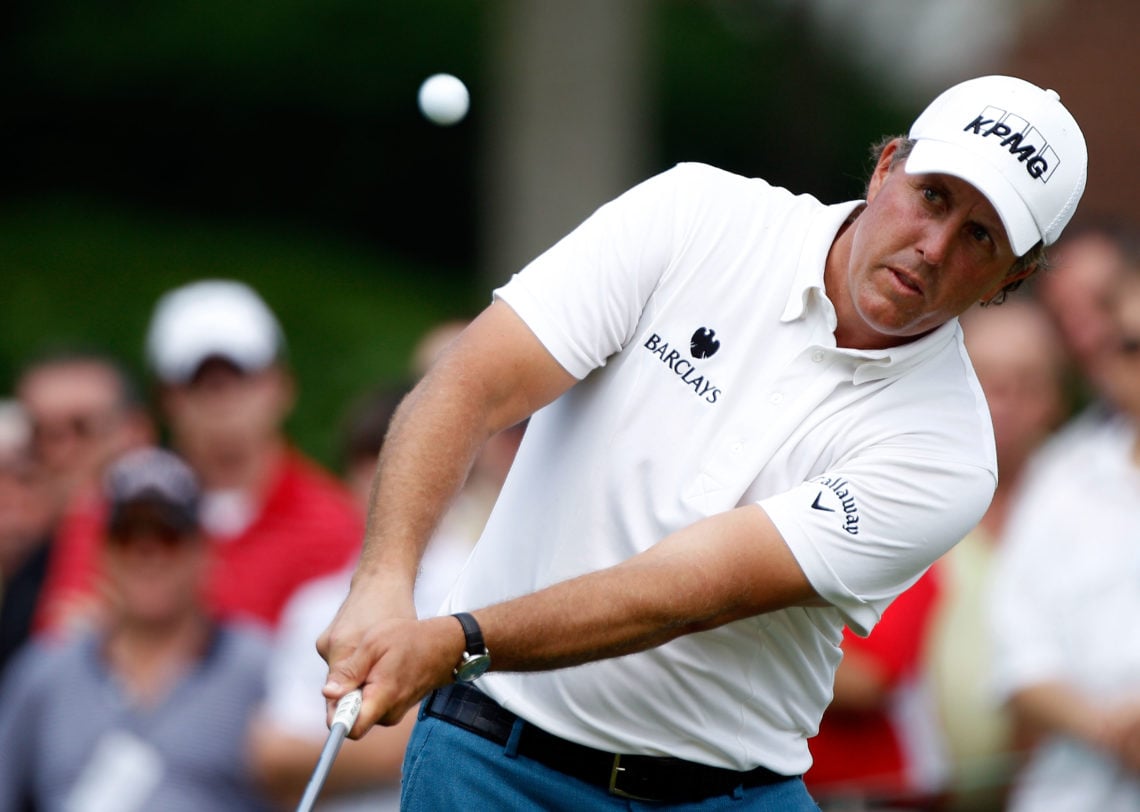

The dreaded 50-yard pitch shot can frighten most amateur players. The prospect of the ball ending up well short of its intended target is a real possibility.
Too often, amateur golfers lose momentum in the downswing and ultimately catch the ball heavy and nowhere near the centre of the face.
But why does this happen?
Amateurs are often fearful of hitting the ball too far from inside 50 yards. As a consequence, non-committal swings occur. Phil Mickelson – revered for his short game – thinks he’s found a solution.
Phil Mickelson’s 50-yard pitching advice
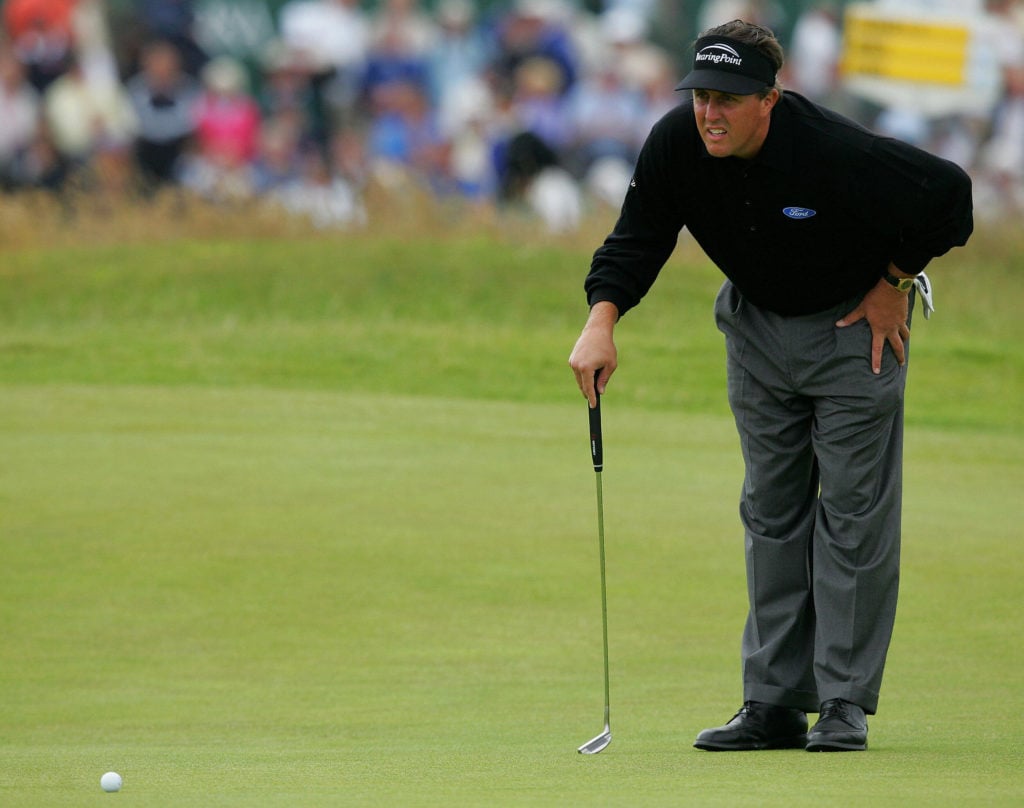
Speaking during a YouTube clip, Mickelson detailed where most club-level golfers go wrong when attempting to play difficult in-between yardages.
“What I have here is a 50-yard shot. So many people in the game struggle with this shot. I take my normal 60-degree wedge. The key to this shot is accelerating through impact. I see so many instructors teach like a clock method where you want to go back and through the same difference; that’s crazy,” Mickelson said.
“You want to accelerate into the ball. We want to go shorter back and accelerate into the finish; that gives me aggressive contact. We have to go into the ball aggressively to hit these 50-yard shots solid and close to the hole. If we are slowing down because you’re taking the club back too, you have no chance of being consistent or successful.”
Mickelson has previously shared similar chipping advice and encouraged amateur players to speed up through the ball when around the greens. Golfers who want more advice from the legendary lefty could be in luck. Mickelson is set to release a new coaching series on his YouTube channel that will help players of all levels.
- READ MORE: Tiger Woods’ ‘very simple’ drill which will help amateur golfers hole more putts on the greens
How else can players improve from 50 yards?
Short-game coach Dan Grieve is another excellent source of knowledge golfers should lean on when looking to improve.
When discussing pitching, Grieve suggests amateur players should alter their set-up in order to shorten their swing and, in turn, hit the ball a shorter distance without slowing down.
For example, the stock yardage of a 56-degree wedge wedge is 100 yards. If a player wants to hit a 30-yard shot, Grieve suggests gripping down on the club and deploying an extremely narrow stance, which will naturally prevent the ball from going as far. From there, a golfer can swing freely whilst knowing they won’t fly their intended target.
A similar technique can be used with a 52, 50 or even a pitching wedge to change the trajectory of an approach shot depending on where the pin is placed. A back pin, for example, could require a lower-flighted shot, whereas a front pin requires height to stop the ball dead.
Receive exclusive golf news and updates twice a week to your mailbox