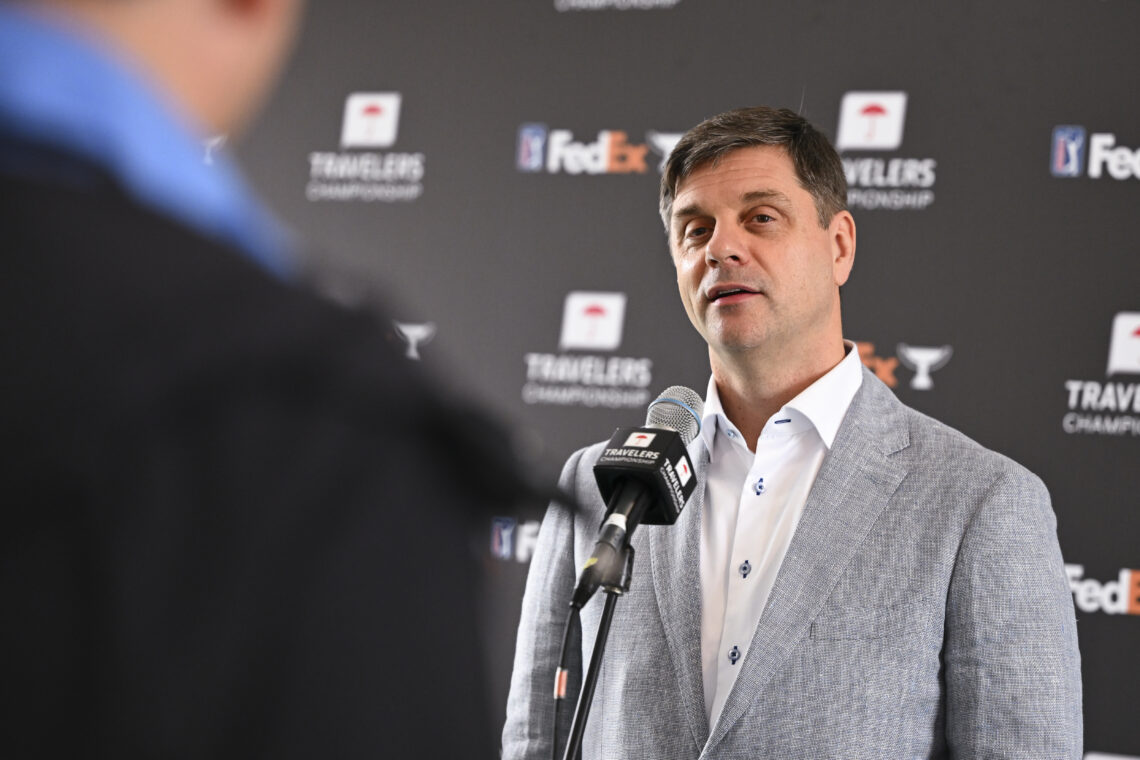

PGA Tour CEO Brian Rolapp arrived from his NFL role with the aim of continuing golf’s surge to the mainstream.
The former COO of NFL Media played an instrumental role in the NFL’s meteoric rise as America’s most popular sport.
According to Statista, the NFL was the most-watched American sports league in 2023, with over 900 billion minutes watched throughout the season. That was three times the viewership of the NBA, which has nearly five times as many games.
Brian Rolapp is hoping to translate some of the lessons he learned from the NFL to the PGA Tour. Rolapp said he won’t be bound by the PGA Tour’s traditions when making changes moving forward, which has drawn criticism of the PGA Tour’s CEO.
And his biggest proposed change as CEO has just been revealed, as Rolapp eyes a shorter PGA Tour season.
Harris English said the PGA Tour is considering moving away from signature events and instead having 20-22 events that are treated equally. That means the best players in the world can’t afford to pick and choose which tournaments they play, as they’re all equally important to their season.
This is a stroke of genius from Rolapp and the PGA Tour, and it shows that he has learned exactly the right lessons from the NFL.

What Brian Rolapp has learned from the NFL with recent PGA Tour changes
The NFL has become the most popular sport in America by prioritizing one key thing: urgency. The NBA has an 82-game season. The MLB regular season consists of 162 games. Meanwhile, the NFL season is fought over just 17 fixtures, each more important than the last.
In a world that’s more distracted than ever, the NFL has created an environment where every Sunday is must-see TV. Every loss is a disaster, and every win feels like a triumph. Each result has significant implications for the outcome of the season, so every player must play every game.
That’s how the NFL has made Sundays their day. They made every game matter. And that’s what the PGA Tour plans to do to golf.
By shortening the season and removing signature events, every tournament matters. A win on the PGA Tour wouldn’t just be something that a player can add to their resume. It would have real implications on the FedEx Cup standings and Ryder Cup qualification.
Not only would these changes mean the best players in the world would play more often, but they would be playing in events with tangible consequences.
While a bad tournament for a player wouldn’t cost them their season, a run of bad form could have drastic consequences. And in truth, what does a tournament mean if it doesn’t have consequences?
Fewer events mean higher stakes, and higher stakes mean greater participation. It’s also far better for fans to be missing the PGA Tour than for them to be oversaturated by it, with so many events that they can pick and choose.
If this new schedule comes to fruition, it can only be a good thing for the tour.
New start date would benefit the PGA Tour
In addition to the reported new schedule, English revealed that the PGA Tour could move to a new start date after the Super Bowl.
This would mean tournaments in Hawaii and on the West Coast will not have to compete for attention with the NFL playoffs.
Rolapp is uniquely positioned to make this change. Any other CEO would have to bite the bullet and acknowledge that the NFL is the most popular sporting product in the country, and give in to that reality rather than fighting it.
But Rolapp was a part of the NFL’s success, and wouldn’t have to suffer the same dented ego by making this move. If anything, he’s crediting his own success in his former role by attempting to move the PGA Tour’s schedule.
It’s a clear reality that the PGA Tour cannot compete with the NFL playoffs in February, and it took a former NFL employee to recognize that. Now, the tour can attempt to claim the vacant airtime that exists after the conclusion of the NFL season, and make it their own.
Receive exclusive golf news and updates twice a week to your mailbox