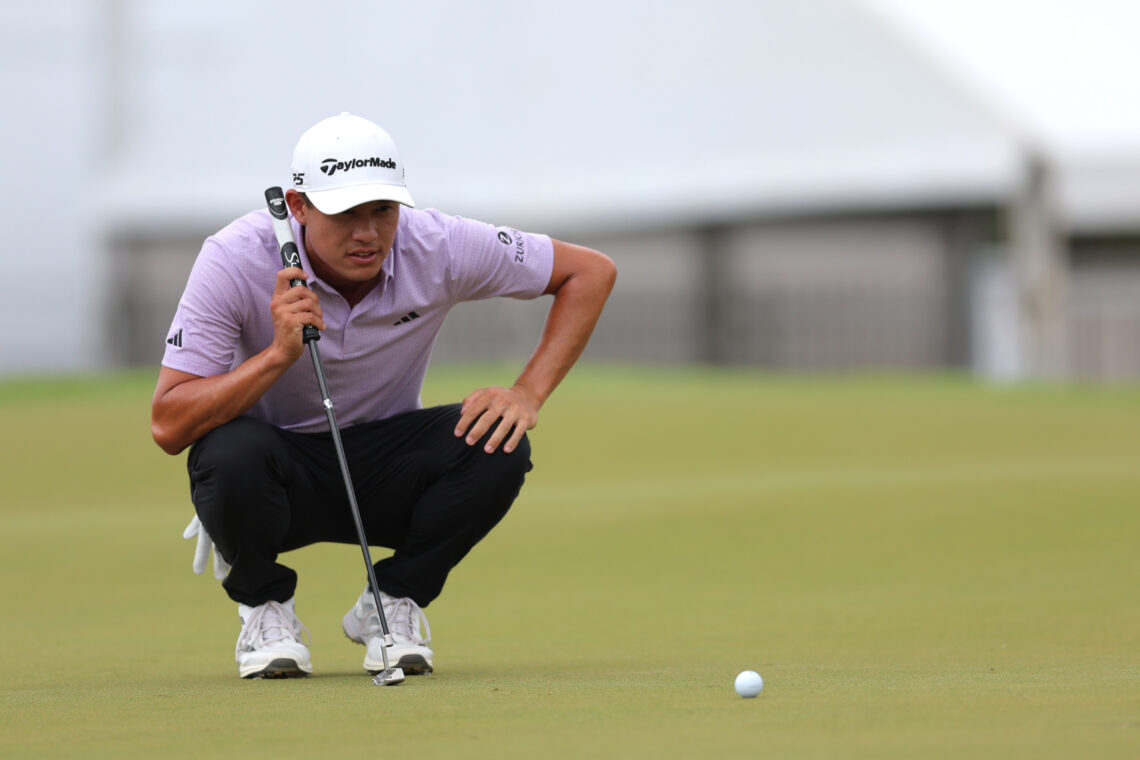

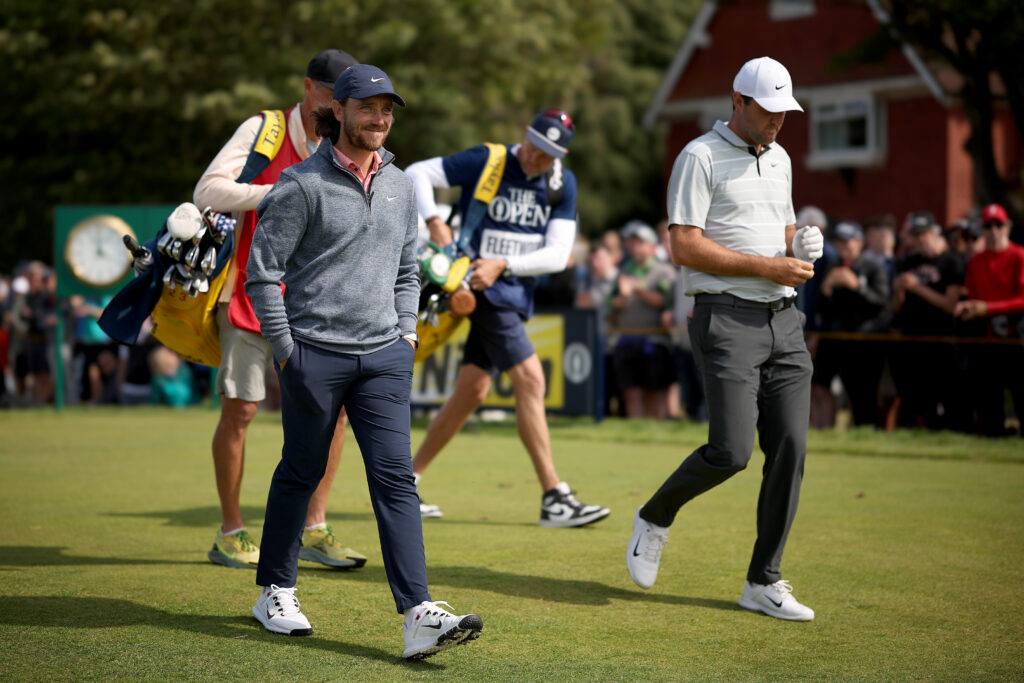
The last 12-18 months have been a real struggle for Collin Morikawa and now he needs to take inspiration from Scottie Scheffler and Tommy Fleetwood if he is to rediscover his very best form.
Morikawa is without a PGA Tour win since October 2023 with Scheffler racking up 13 victories during that time.
Meanwhile, Fleetwood recently broke his duck by winning his first PGA Tour event and then followed that up with a win on the DP World Tour two weeks ago.
Scheffler and Fleetwood are both the best iron players in the world right now, with Morikawa arguably just behind them.
However, while Scheffler and Fleetwood went from strength to strength in 2025, Morikawa regressed while experiencing a really concerning season.
So, what’s next for the 2020 PGA Championship winner and the 2021 Open champion?
A big change could well be required if the 28-year-old is to get back to his very best.
Collin Morikawa must copy Scottie Scheffler and Tommy Fleetwood
It’s obvious to see that Morikawa’s glaring weakness over the past year or so has been his substandard putting.
The 28-year-old lost more than 0.3 shots on the field on the greens in every single round he played in 2025.
It’s little wonder why he hasn’t recorded a PGA Tour victory for more than two years now.
Now Morikawa has to make a big change if he is to return to his best. He has already won two major championships so his quality cannot be questioned.
The American Ryder Cup player needs to make a big switch-up concerning his putting and join the ever-increasing stable of players coached by Phil Kenyon.
The putting guru works closely with Scheffler and Fleetwood and has made a huge difference to both of their performances over the past couple of years.
Looking at the table below, we can see the strides made on the greens by the world’s number one and number five players.
| Player name | 2025 strokes gained putting rank | 2024 strokes gained putting rank |
| Morikawa | 150th | 73rd |
| Fleetwood | 19th | 92nd |
| Scheffler | 20th | 77th |
If Morikawa can find a way to even get inside the top 50 or 60 in the strokes gained putting stats, he will be a real force once again, such is the quality of his iron play (ranked 3rd in 2025) and driving (ranked 15th in 2025).
Peter Kenyon explains how to stop being scared of short putts
Kenyon’s philosophy revolves around a target-oriented routine and the importance of matching up your speed with your start line.
However, when it comes down to those short putts inside five feet, Kenyon’s approach centers more around the psychological aspect.
He has a very simple theory when it comes down to the best way to make more putts from inside five feet.
Kenyon explained: “Here’s a simple step that is going to help you with your short putting.
“A common mistake I always see, I think stems from anxiety on short putts. We know we’ve got to make these putts, it puts a lot of pressure on us and as a consequence, I will typically see a lot of movement, I’ll see a lot of eye movement and head movement before impact.
“That’s going to make it difficult to strike the ball in the center, control your face angle and start your ball on line.
“So here’s a really simple exercise you can do in order to quieten your mind and as a consequence, allow you to put a good stroke on it.
“Once you’ve got your ball lined up at your read, step in, line up your putter, look down at the hole and as you come back, I want you to have left a very small gap between the club and the ball. As your eyes come back from the hole to the ball, I want you to pick a blade of grass directly behind the ball and I want you to focus on that blade of grass.
“But whilst you look at that blade of grass, I want you to be aware of where your target is in the distance. So we’re looking at the blade of grass but we have an awareness of where our target is in our mind’s eye.
“I step in, I’ve got my line, I leave a little gap, I can see that blade of grass, look down at my target, come back, look back at the blade of grass, I can sense the target and when I stroke the ball, my eyes will be looking at that blade of grass.
“Now, if you do that successfully, you will almost see an after-image, after you strike the ball. Whether you see the after image or not, the fact that the ball is on its way that means you have stopped peeping for the ball. That’s going to keep your body quieter, more importantly your eyes quieter and that’s going to enable you to put a good stroke on it.“
Receive exclusive golf news and updates twice a week to your mailbox