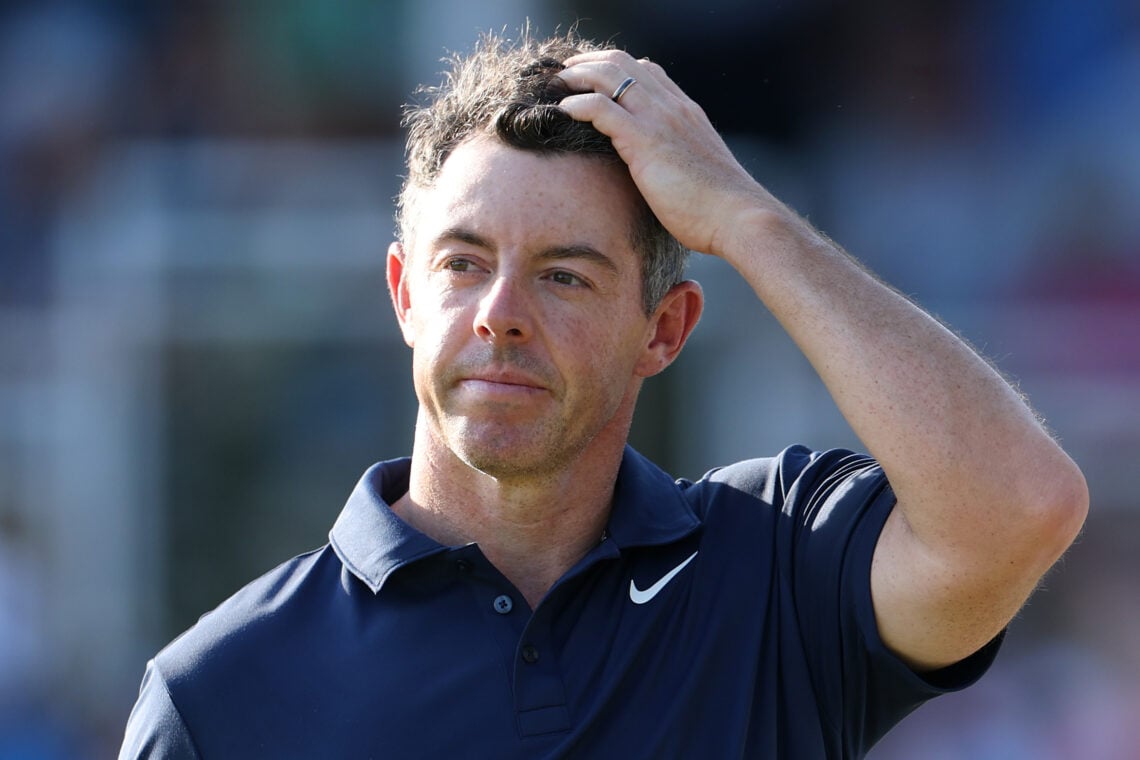

Before the PGA Championship, many feared for Aronimink Golf Club.
It was the first time this historic Donald Ross design had hosted a major since the 1962 PGA Championship, and how times had changed since Gary Player won the Wanamaker Trophy 60 years ago.
There were concerns that players would render Aronimink’s defenses obsolete with their ridiculous distance off the tee. The major championship record score was in danger of being broken, or so they said.
Before a ball had even been struck, the golf ball rollback was once again at the center of discourse, as the golfing world seeks ways to stand up to the ever-advancing technology in the sport, which is overpowering the game.
But the PGA of America proved that there are far better ways of guarding the game than rolling back the golf ball.
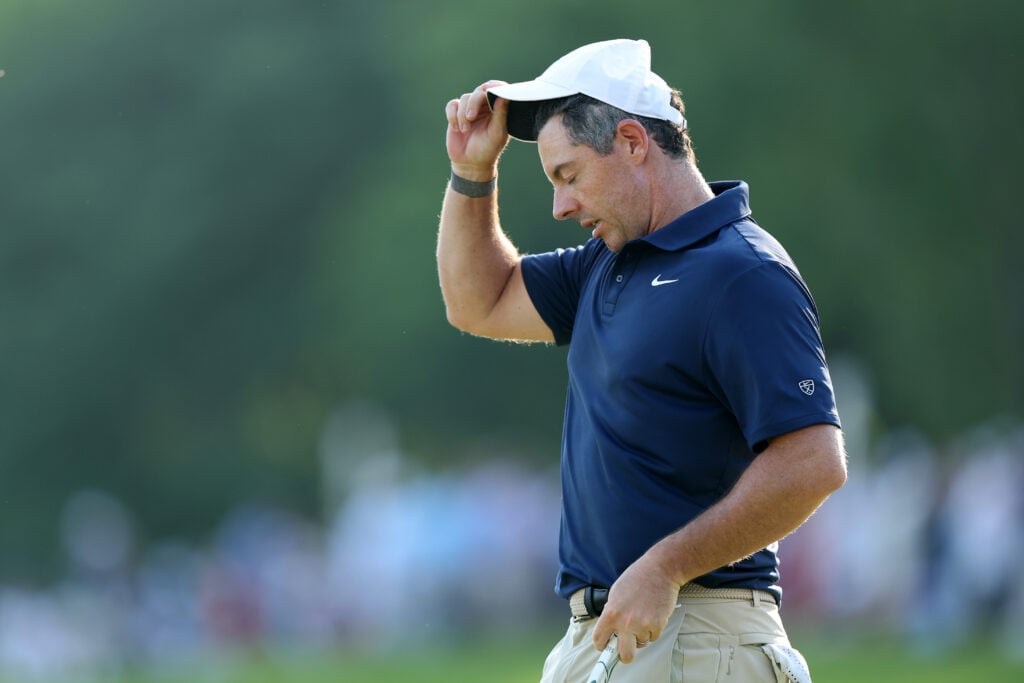
Aronimink’s setup showed golf courses how to combat distance
It was immediately clear that Aronimink wasn’t as defenseless as was first feared. This place had teeth.
The best score on opening day was three under, and the winning score was just nine under par, as players struggled to overpower the course despite their best efforts.
Yes, the howling wind helped this for the first few days, but by Sunday it had died down. As Rory McIlroy, Scottie Scheffler, and Jon Rahm looked to take advantage of these conditions, the PGA of America won the day with their setup of Aronimink.
They did so by making fairways a premium. The rough was thick and sticky, leaving any chance of holding the green, let alone making birdie, a daunting prospect for those who found their ball sitting in its depths.
Aaron Rai won the tournament not because of his overwhelming distance. Instead, it was his laser accuracy off the tee that gave him continual looks at birdie. He hit a four iron into the par five 15th, where McIlroy hit a seven, and still came out a shot better than the Masters champion.
And the greens, as firm and undulating as they were, proved too much for the majority of the field. Finding the fairway wasn’t a guaranteed birdie, as players still needed to find the correct part of the green and hole a swinging putt.
Shockingly, the golf course won, and in the process proved that the key to keeping players honest in 2026 isn’t limiting their distance. Instead, they used their distance against them, and punished their greed off the tee.
Why Aronimink’s setup isn’t the answer for every event
Admittedly, this solution won’t work every week. In fact, if every golf course set up this way it would likely kill the sport.
It was no coincidence that this proved to be one of the strangest golf tournaments in recent memory. All week, the players complained that the setup made it impossible for any player to find separation on the scoreboard, and that’s why 30 players were in the mix on Sunday.
Despite the bunched leaderboard, Sunday fell a little flat. No player was able to build any momentum from hole to hole or go on a charge because the golf course was playing so tough.
The pin placement meant players had to hit a minuscule target or risk their ball rolling painstakingly away from the flag. This meant that a good shot would roll to within 20 feet of the pin, and a bad shot would roll to about 25 feet. There really wasn’t much to separate ball striking ability.
This took the wind out of the tournament late, so the setup wasn’t perfect. Yes, the long rough kept the players honest off the tee, but it would have been nice to see some rewards for those who did hit the fairway.
From week to week, golf would be pretty boring if no one could make a run of birdies.
Receive exclusive golf news and updates twice a week to your mailbox