

Slow play is likely to be one of the major talking points in the early stages of the new PGA Tour season with a number of full-field events set to kick off the year.
The early stages of 2025 felt turgid at times. The likes of The American Express and the Farmers Insurance Open forced the PGA Tour into action.
Rank these PGA Tour events from BEST to WORST…
Tough decisions! 🤔
- Pebble Beach Pro-Am
- Arnold Palmer Invitational
- The Players Championship
- Memorial Tournament

Field sizes will not be quite as large in 2026. Nevertheless, it would be no surprise to see the pace of play attract plenty of attention ahead of the year’s first signature event at Pebble Beach.
It is bizarre that the PGA Tour does not appear to have made a stronger effort to eliminate slow play – particularly as Will Zalatoris believes that there is a fairly simple solution.
Will Zalatoris suggests an easy way to tackle slow play
Zalatoris was asked about how amateurs being able to hit the ball so far with current equipment impacts the pace of play. Of course, most casual golfers know the feeling of standing on a tee and having absolutely no idea where their drive is going to go.
And speaking to Fried Egg Golf, Zalatoris suggested that he is convinced that reducing the length of golf courses would tackle the problem almost immediately.
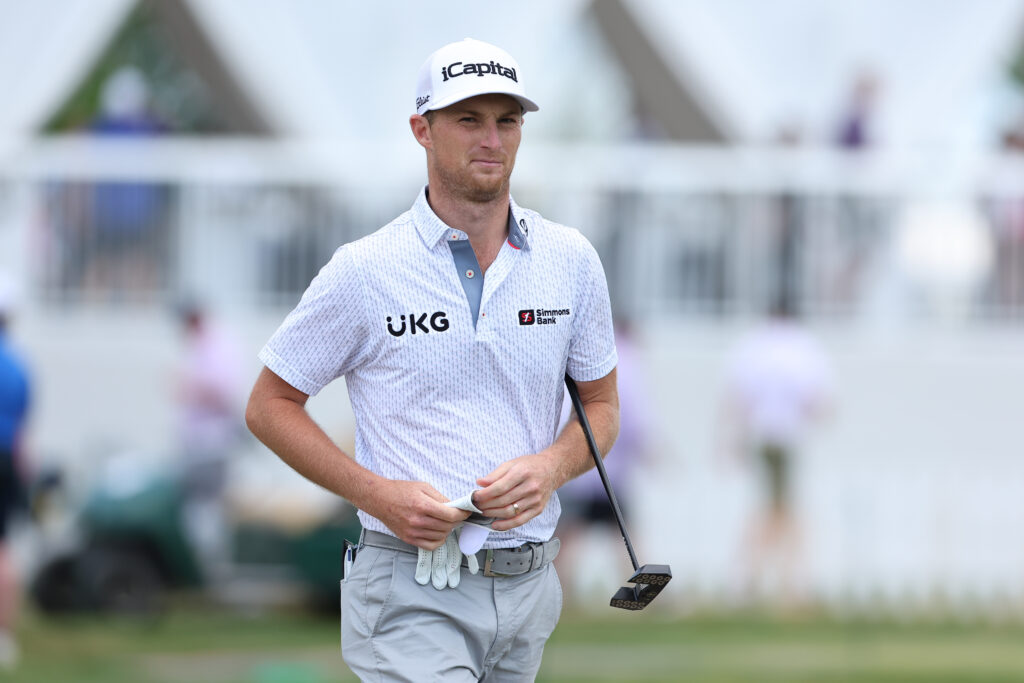
“It’s funny, and I’ve had this conversation with multiple people from the USGA that are just buddies shooting the breeze. They’ve asked me what’s your stance? I’m like, you want to know how to get under four hours real quick, draw it back to where the longest guy is 260 yards. That’s real easy,” he said.
“Instead of walking back 80 yards to this new tee you guys are so proud of that costs $100,000 to build, how about we play the old tee. That saved us a little bit of time there. Now the walking in between holes gets faster.”
Zalatoris suggests the problem with limiting the rollback of the golf ball and equipment to the professional game
Of course, the game is also moving closer and closer to notable changes concerning the golf ball coming into effect.
From 2028, the golf ball in the professional game will not go quite as far. The amateur game will have until 2030 to comply with the changes.
There is a concern about the sustainability of the game if players are able to hit the ball further and further.
Some feel that the rollback should be limited to the professional game. But Zalatoris suggested that there is a potential problem to having one set of rules and equipment for the best, and another for amateurs looking to reach the highest level.
“I’m all for the ball going way shorter. But it has to be done the right way,” he said.
“The issue where I got lost with it too is when the talk of bifurcation in general [began]. You look at it in terms of player development, does a kid who, let’s say they’re a pro level [and] the PGA Tour decides to bifurcate, the problem with that in general is does the kid now play, in theory, inferior equipment while they’re in college and going through development to get to the PGA Tour? Or do they play what’s thought of superior equipment and then they get to the tour and then play something completely different? There’s no win.”
It would obviously be a shame to many fans if the likes of Rory McIlroy and Bryson DeChambeau were no longer able to hit 350 yard drives with relative ease.
But golf does need to change. A number of the courses on the PGA Tour are far from inspiring with distance attempting to be the main defence.
It would be a lot more interesting if there was much greater risk to taking the driver on a hole. And as Zalatoris suggests, those are the golf courses which would likely help speed up play.
Receive exclusive golf news and updates twice a week to your mailbox