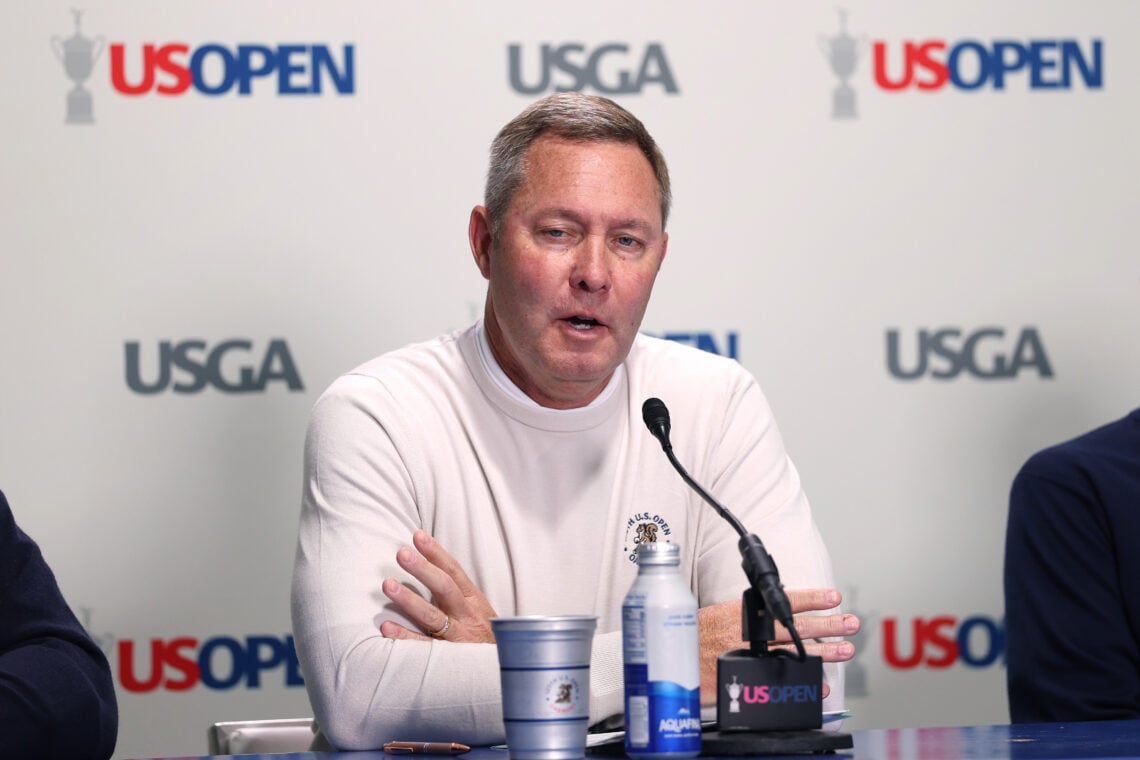

The Rory McIlroy driver testing controversy is still being talked about ahead of the US Open this week.
McIlroy was flying high after his win at The Masters in April, but things changed quickly in the build-up to the PGA Championship in May.
Before the tournament began at Quail Hollow, McIlroy’s driver was deemed to be non-conforming, and he has never really recovered from that.
The Northern Irishman didn’t do anything wrong, drivers failing tests before tournaments is a weekly occurrence on tour – the same thing happened to Scottie Scheffler at the PGA remember!
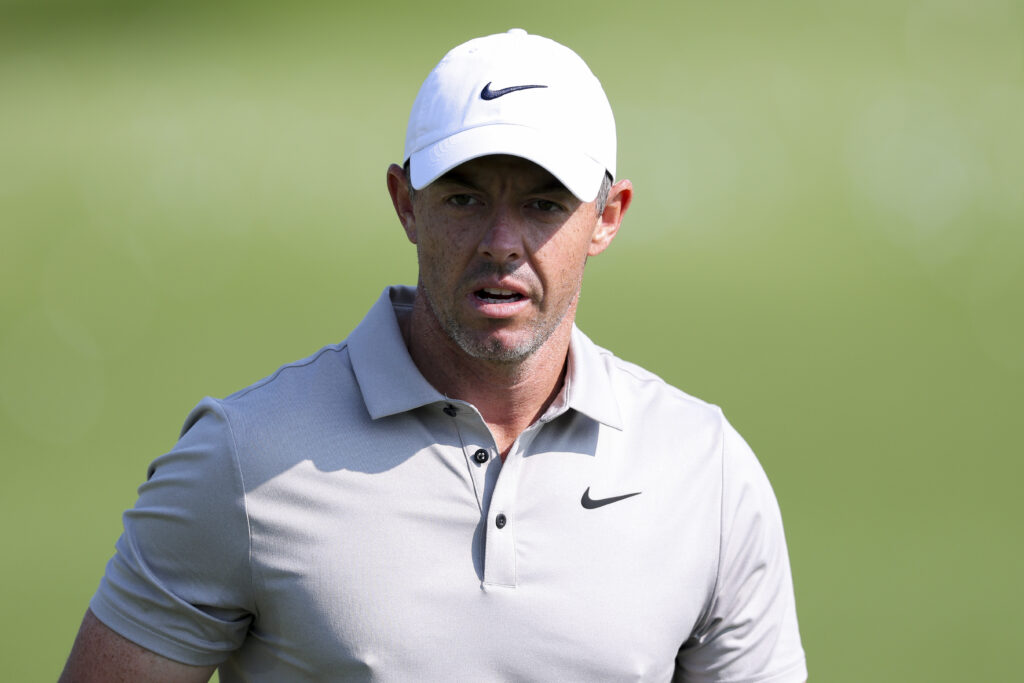
McIlroy was angry because his name got leaked, while nobody else’s did.
So has anything changed to the testing procedure since the controversy involving McIlroy, ahead of the US Open this week?
USGA’s statement about driver testing before US Open after Rory McIlroy issue
McIlroy’s anger at his name being leaked led to him refusing to speak to the media for the entire week at Quail Hollow.
Whether you agree with the five-time major winner’s actions or not, we can all agree that his name should not have been the only one that was leaked.
So how will that be avoided this week at Oakmont?
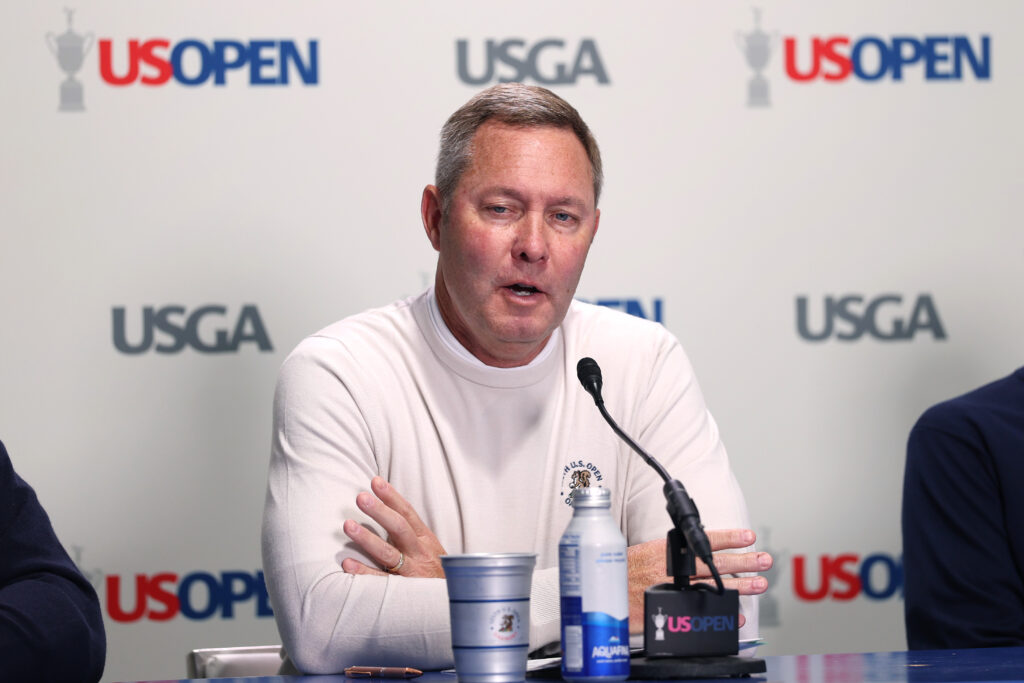
USGA CEO Mike Whan spoke to reporters on Wednesday afternoon about the upcoming US Open.
And he responded when asked whether driver testing protocols have been changed ahead of this year’s championship.
He explained, “Just to rephrase a couple of things. For the rest of the world, we test what we call CT creep, characteristic time creep, which is I’m assuming what you’re talking about. That’s essentially how long the ball stays on the face.
“Think about a kid jumping on a trampoline, and the longer they’re on the trampoline, the farther they bounce off. So we set a limit with manufacturers in terms of how long that ball can stay on — it’s tested in terms of microseconds. There’s a test, there’s a tolerance, but at the end of the day, if it’s on there for more than 258 microseconds, we consider that club out of tolerance.
“So as a service to the players, to the tours, and we do it here, as well, we do random testing pretty regularly. I think sometimes when we say “random testing,” people think — if you’re playing on Tour, you’re going to get tested a couple, three times a year, and we think the testing that we’re doing is commensurate with both the degree of failure that we see, which is pretty minimal — and quite frankly, when we see failure, at least currently, we’re seeing clubs just literally creep over the line. It’s a line we draw — we aren’t seeing when we’re taking drivers off, drivers that are, oh, my gosh, look where that one went.
“So I think sometimes in the media and the fan space, you think, we just took 20 yards off that player. We’re literally talking about an extra microsecond, and if you get within I think it’s 18 microseconds of the line and we test you, we give you what we call a yellow warning, which is, hey, be careful, that club is starting to — because at the velocities and at the frequency at which they hit these clubs, they will just relax over time.
“So as a service to manufacturers, to the players and to the tours, we provide that. If I’m being honest with you, I think in terms of what happened at the PGA Championship, it made us more committed to not wanting to have this be the topic of the town because I think when you talked about a rules violation or somebody who’s playing with a hot driver, that gets so much more sensational than the reality.
“I can tell you as a rules body, if we had concern about this incredible advantage, we would change the degree in which we test. But we think the testing that we’re doing now is commensurate with the size of both the issue and the size of the reality of the issue.
“And probably shouldn’t admit this, but I’m not even in the — I know we tested this week. I couldn’t tell you if we had failures, and if so, what those failures were at the time. I could probably go ask, but I stay out of that mix.
“I know that if we saw a trend that was alarming in terms of either how many or how far they were moving beyond, we would change the way we approach it. But with what we’re seeing today, it would be a greater interruption — the juice wouldn’t be worth the squeeze.“
What McIlroy has said about his problems with his driver
McIlroy really struggled with his TaylorMade Qi 35 driver last week at the Canadian Open.
He missed the cut after shooting rounds of 71 and 78, and shared with the media after his second round his thoughts on the big stick.
He said, “I went — so I went back to a 44-inch driver this week to try to get something that was a little more in control and could try to get something a bit more in play. But if I’m going to miss fairways, I’d rather have the ball speed and miss the fairway than not.
“I was saying to Harry going down the last this is the second time this year I’ve tried the new version, and it hasn’t quite worked out for me. So I’d say I’ll be testing quite a few drivers over the weekend.“
McIlroy has switched back to the Qi 10 driver for the US Open at Oakmont this week.
And it remains to be seen as to whether that proves to be an inspired decision or not.
Receive exclusive golf news and updates twice a week to your mailbox