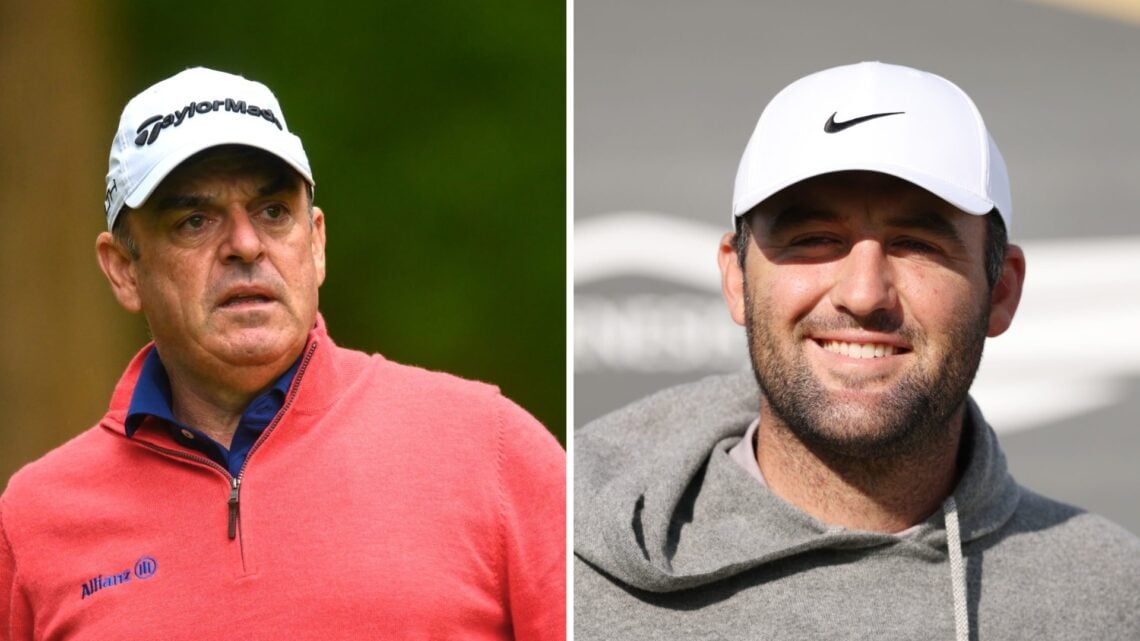

Scottie Scheffler will be looking to win his fourth major this week at The Open Championship.
On paper, Scheffler‘s game should be ideally suited to the challenges that Royal Portrush represents.
He can work the ball both ways and is exceptionally good at flighting his iron shots low beneath the wind.
Scheffler is a self-confessed fan of playing The Open at links venues, and he definitely seems like the sort of character who embraces the challenge at hand.
The 29-year-old has enjoyed a magnificent 2025 season on the whole. However, Scheffler did look somewhat out of sorts at The Scottish Open last week, despite still finishing inside the top-10.
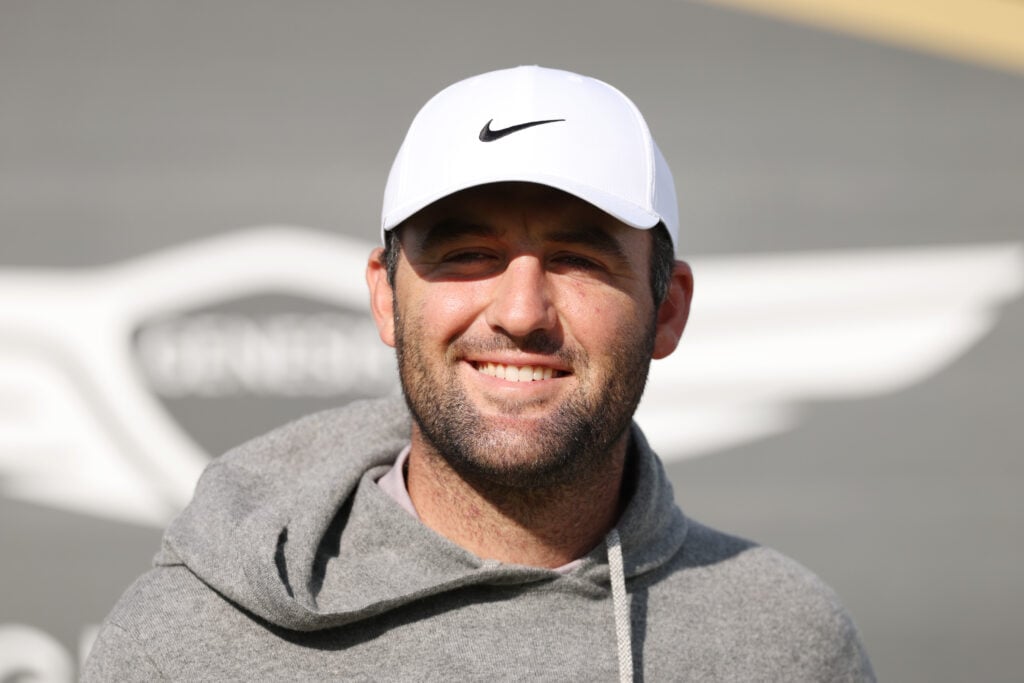
He wasn’t anywhere near his imperious best, and Paul McGinley thinks he knows exactly why that was.
Paul McGinley says what could hold back Scottie Scheffler at The Open
McGinley is often very outspoken when it comes to his role as an analyst for The Golf Channel.
The Irishman doesn’t pull any punches when criticising players, and despite offering praise for Scheffler, he still found one very specific fault in the American’s game.
McGinley said: “It’s always very difficult to pick holes in Scottie Scheffler. You look at his statistics right through the bag, it’s absolutely phenomenal. We’ve talked about this at length.
“This guy is as close to Tiger Woods in terms of performance right through the bag than we’ve ever, ever seen, he’s really close to Tiger Woods.
“However, what we haven’t seen with Scheffler, is a vintage record over here in Europe. Now, what we do at the Ryder Cup when Americans come over, we slow the greens down. We know Americans are not used to slow greens. We have the greens running at 10.5/11. It throws the Americans off kilter a little bit because they’re used to 12, 13 and 14.
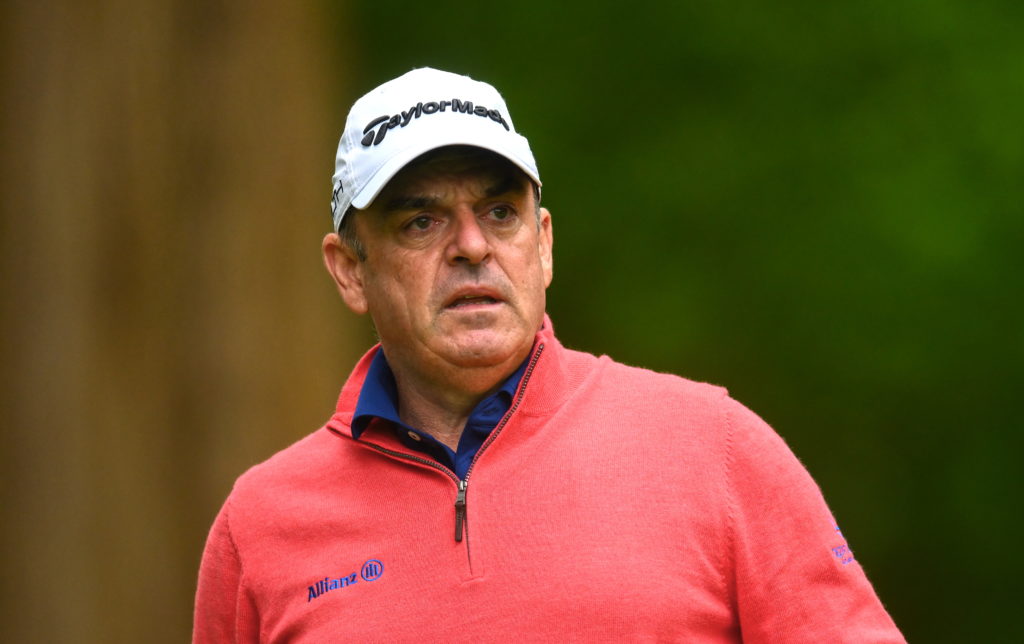
“If you look at Scottie Scheffler’s performance, not just in Scotland last week where he was pretty abysmal, but if you look at his last three or four Open Championships he has played, he’s ranked down as one of the lowest and worst performers on the greens in the last three or four years. It’s not often he’s ranked near the bottom of something, but putting is one.
“He has not got himself equipped for slow greens. So what adjustments to make? What happens is, in order to hit the ball a certain distance, your mind is telling you one thing and then you hit it and come up a little bit short. What it does is, it throws out your rhythm, you try to get the ball to the hole and you start forcing it. When you lose your rhythm in the putting stroke, that’s when you’re in trouble. That’s where he’s at, and he hasn’t made that adjustment yet. That doesn’t mean he can’t find it and he’s not working towards it, but at this moment in time, from what we’ve seen, his putting has not been good enough on these slower greens.“
Scottie Scheffler’s putting stats on the PGA Tour in 2025
Interestingly, the world number one has made huge strides on the greens this year.
It’s easy to forget just how poor of a putter he was in seasons gone by.
Here is how his putting stats look in 2025:
| Year | Strokes gained putting rank |
| 2025 | 22nd |
| 2024 | 77th |
| 2022-23 | 162nd |
| 2021-22 | 58th |
| 2020-21 | 107th |
As you can see, Scheffler has improved exponentially on the greens over the past five seasons.
The jump he has made from 162nd to 22nd in just two years is quite incredible.
And if Scheffler manages to figure out a way to improve his putting on links greens, there’s a very good chance that he will enjoy huge success at The Open over the course of the next 15-20 years.
Receive exclusive golf news and updates twice a week to your mailbox