
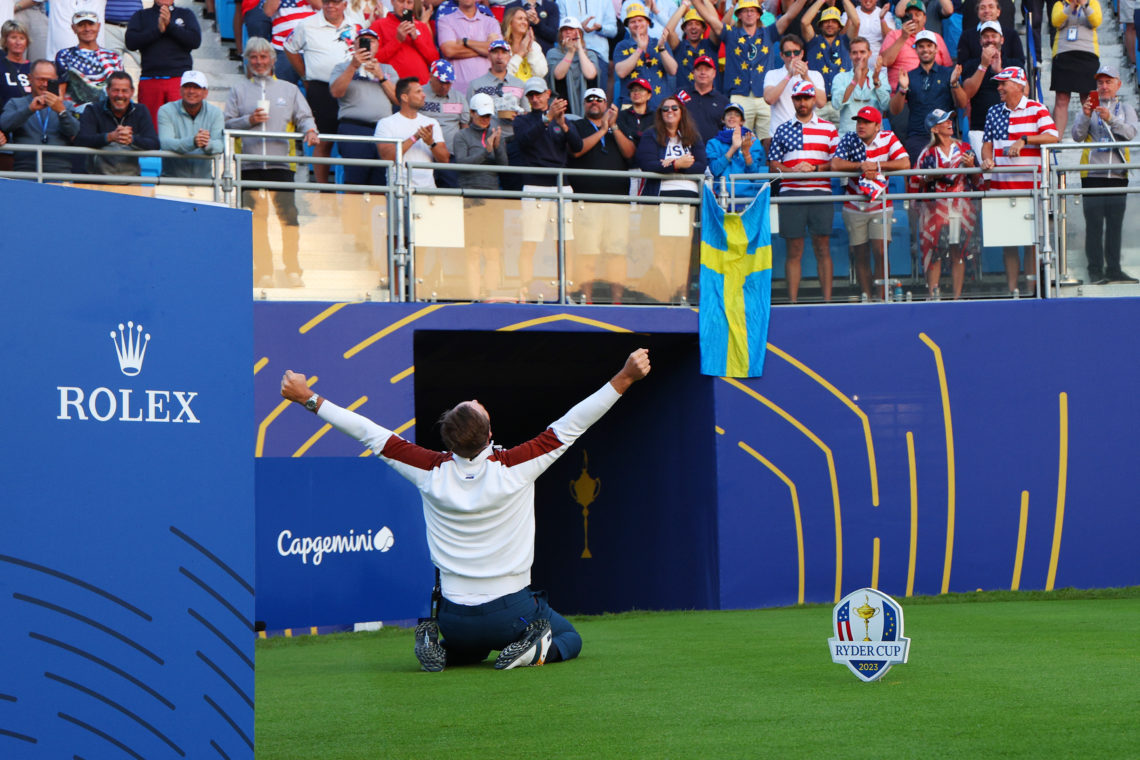

When someone has had the kind of career that Nicolas Colsaerts has had, it is not entirely surprising that things have been tough at times for the Belgian.
Few players have made quite the impression on their Ryder Cup debut like Colsaerts did. In fact, you could quite easily forget that the 41-year-old actually only won one point in his Ryder Cup career, after receiving a captain’s pick from Jose Maria Olazabal ahead of the 2012 event.
His performance alongside Lee Westwood in beating Tiger Woods and Steve Stricker on Friday evening gave Europe some hope after a nightmare session – and ensured Colsaerts immediately wrote his name in Ryder Cup folklore. He made eight birdies and one eagle as the visitors won one up. Of course, that match would prove to be crucial as Europe went on to win at Medinah.
In many ways, that Ryder Cup summed up much of Colsaerts’ career. He was able to take on absolutely anyone at his best, but he struggled to hit those highs again, losing his next three matches. And ultimately, he has not played in a Ryder Cup since.
His return to the event actually came in 2023, with Luke Donald naming him as a vice-captain ahead of Rome. Unfortunately for Colsaerts, he was battling some personal problems at a similar time.
Nicolas Colsaerts opens up about his struggles leading into the 2023 Ryder Cup
Speaking on Golf Life in an incredibly moving way, Colsaerts revealed how his life changed almost without warning – and how important the Ryder Cup proved to be in his battle with his mental health.
“I just basically went through depression. There’s that one morning I remember vividly, one morning I wake up in the morning and I have this filter in front of my eyes and couldn’t get out of bed for four days,” he said.
“A grey filter, and no vibration, no love, nothing, just flat as. And at the same time, I’m appointed vice-captain of the Ryder Cup. Every hair on my body stands up, because I needed to be out there to serve a purpose, and at the same time, I knew that it was the worst possible environment for me to be in because I needed to look after myself. And so, the aftermath is, you’re looking at me standing on the first tee at the Ryder Cup doing the clap in front of 20,000, and I look back at this thinking, this guy two weeks ago was struggling to talk to a waiter in a restaurant. So that’s what people don’t know.
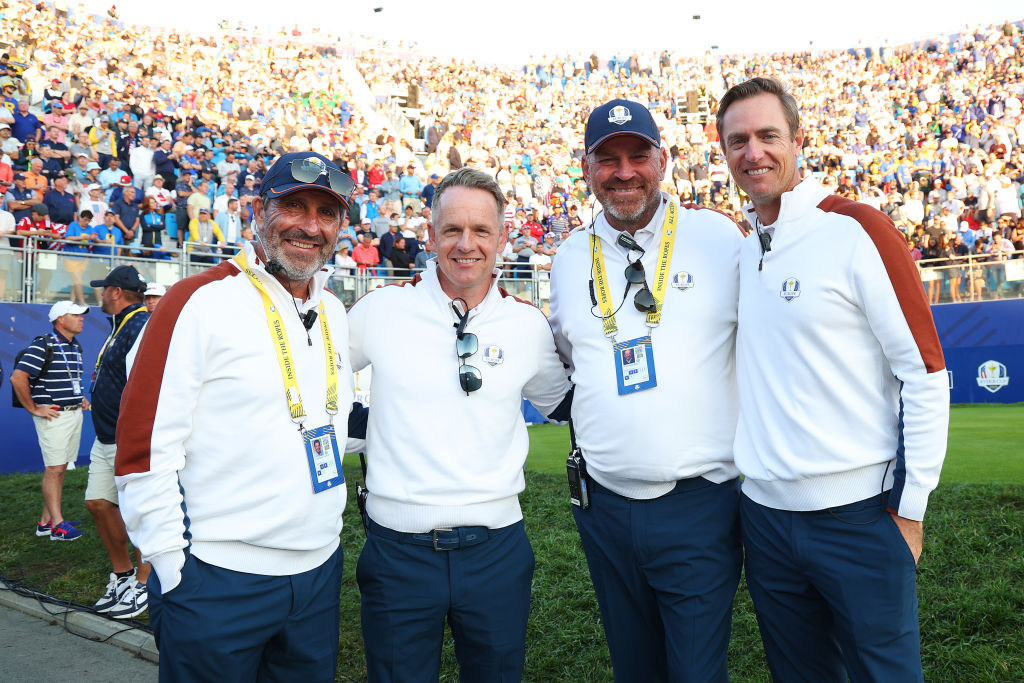
“No [the players weren’t aware]. I needed to tell people that were involved, so Luke, the captain, and the vice-captains, Molinari, Bjorn and all these guys, because I didn’t want Luke, in particular, to find that out after, because then you think I brought this guy who’s strong. I grew up doing team sports, and as you know, the locker room and the staff, it needs to be an open book. You need to know where everybody stands all the time.
“It’s funny when you look at the three claps that I did, the three of them are so very different. The first one, you’re going in there and do what you can, you walk off the tee and you’re shaking and everything. The second one, the next day, I did it extremely selfishly, I was like, I’m going to take every bit of vibe and I’m just going to fill myself up, and that’s why I just fell on my knees and I just looked at the stands. Absolutely stunning.
“That week helped me enormously from a self-esteem point of view.”
A remarkable account which will help many
Thankfully, Colsaerts would confirm that he has not experienced the same level of lows since those four days where he could not bring himself to get out of bed.
There is a perception – one is thankfully changing – when it comes to professional sportspeople that they have everything going for them; living a life that many could only dream of. But clearly, that only tells part of the story.
Golfers do play for a lot of money at the very highest level, but the costs are enormous for those further down the rankings, and the stakes are so high when they are trying to keep their cards on the various tours.
And of course, Colsaerts has experienced some of the highest highs in the sport. What Europe did at Medinah 12 years ago was indeed a miracle, and the Belgian’s performance on that Friday evening was arguably only second to what Ian Poulter did the following day.
But success in a certain field does not guarantee good mental health either, and Colsaerts opening up in this way will surely help a lot of people. It is fantastic to hear that he seems to be in a better place right now.
Receive exclusive golf news and updates twice a week to your mailbox