


Amateur golfers lose far too many shots from inside 100 yards. Whether it’s a thin, chunk or wayward approach, several mistakes happen when approaching the green. Fortunately, they can be easily eradicated.
Let’s take a look at some of the figures. Golfers who shoot in the 90s will have around 13 shots per round from inside 60 yards while off the green. From this distance, according to Golf.Com, a 90 golfer will average around three strokes compared to an 80 golfer (single figure handicap), who will average a quarter of a shot less and, in turn, save 3.25 shots per round.
Improving the consistency of strike is absolutely key. Far too often, amateur players are unsure of whether to commit and fail to accelerate through the swing.
Fortunately, 2016 Open Championship winner Henrik Stenson has offered some advice.
Henrik Stenson’s pitching advice
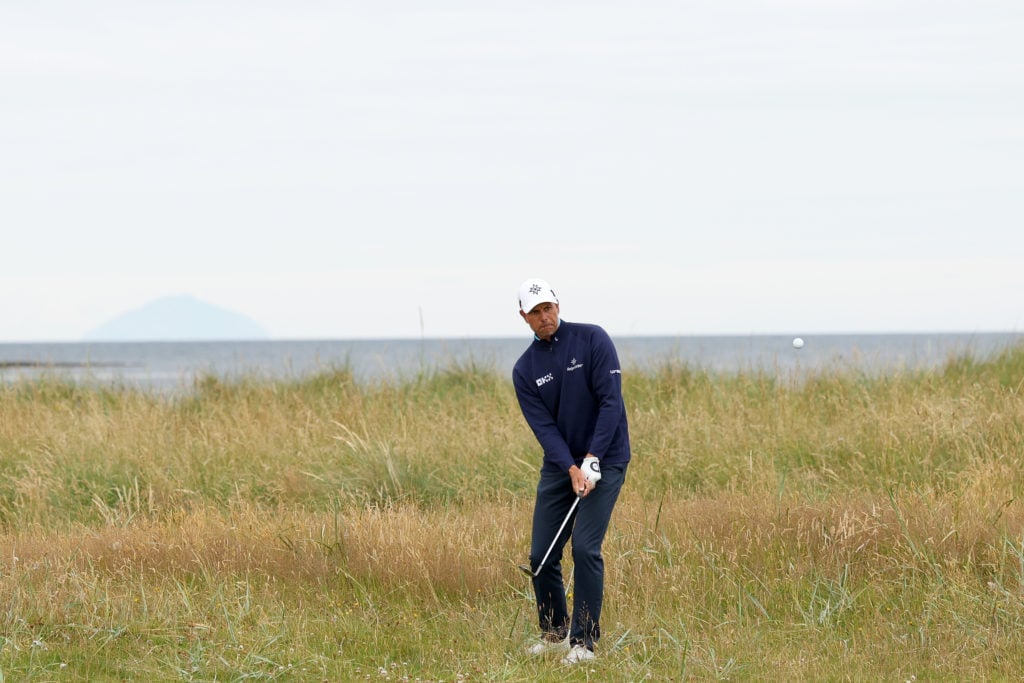
In a social media clip shared by Majesticks GC, the Swede suggested that amateur players often remove too much loft when trying to make 60-80-yard shots.
“When I play a lot of pro-ams, I see far too many poor approaches from 60, 70, 80 yards and a lot of times; it’s the old-fashioned 60-degree wedge that comes out. I’d suggest instead you take either a pitching wedge of a gap wedge. I have got my 52 degree,” said Stenson.
“You obviously need to practice this a bit before you use it, but just like a narrow stance, get a slightly longer wedge than the 60 degrees and make a nice little clip at it, and you hit a nice little 70-yard pitch. Of course, there are times when you really need to hit that aerial shot, and it needs to come into a tight pin, but for the most part, when you guys play, there is plenty of green to work with and find that rhythm on a pitching yard or a gap wedge and throw that in there, and you will set up a lot more par or birdie chances.”
- READ MORE: Tiger Woods’ ‘very simple’ drill which will help amateur golfers hole more putts on the greens
Two types of pitching technique
There are various ways for amateur golfers to control distance when pitching.
First is the clock face method. This technique involves envisioning your arms as hands on a clock and raising them to seven, nine, and eleven for various distances. The player then swings with the knowledge that the ball won’t go as far if their arms have only reached seven o’clock on the backswing.
Furthermore, the technique can also be incorporated into the follow-through to control height. A complete follow-through with any club will promote a higher ball flight.
Another technique that amateur golfers could try is, as Stenson mentions, shortening their stance and gripping down on the club; this will naturally make it hard to complete a full swing and hit the ball further.
By playing around with different set-ups, various distances and trajectories can be used to deal with numerous on-course situations.
Receive exclusive golf news and updates twice a week to your mailbox