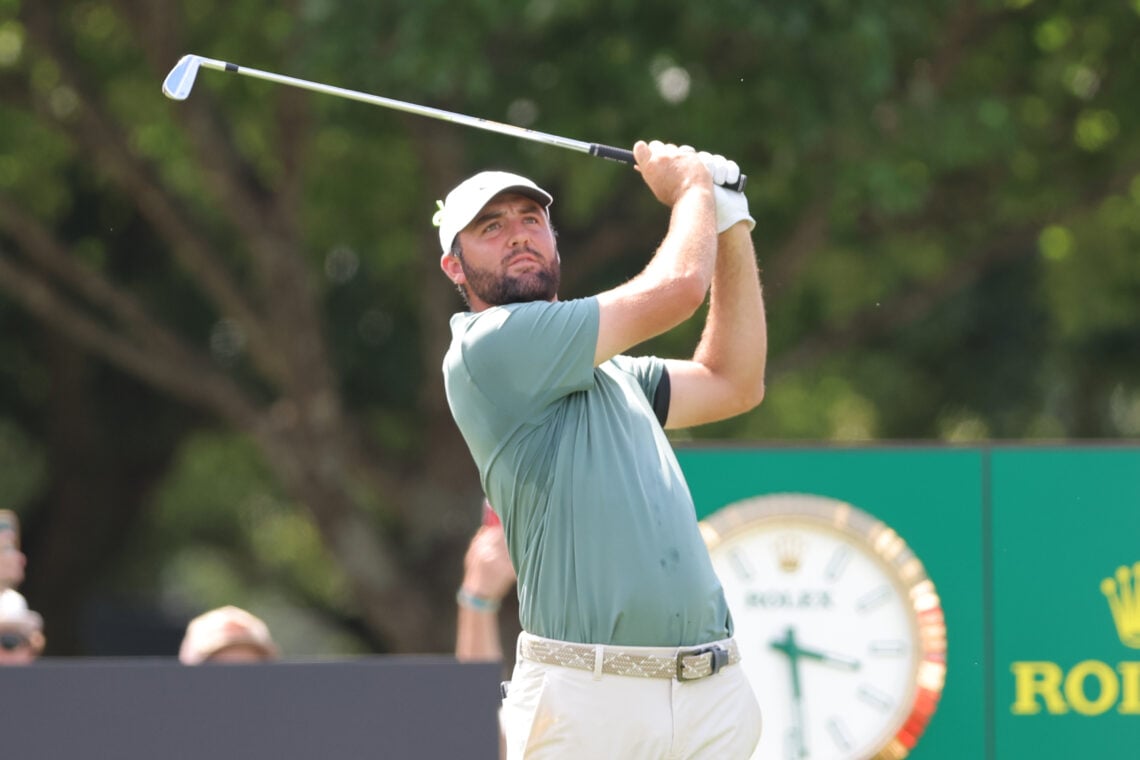

Scottie Scheffler is peerless on the PGA Tour when it comes to his ball-striking ability with his irons.
Scheffler has dominated the strokes gained approach category on the PGA Tour for three years now, having topped the rankings since the 2022-23 season.
So with that in mind, it goes without saying that amateur golfers should be grasping any ball-striking golf tips handed out by the 29-year-old world number one with both hands.
Amateur golfers can learn so much from Scheffler’s swing, despite the fact that his move is far from orthodox.
- Read also: Scottie Scheffler’s ‘pretty simple’ tip to help amateurs improve when chipping from a downhill lie
Tiger Woods’ verdict on Scottie Scheffler’s swing
What makes the Dallas native such a great ball-striker is the control he has of his clubface throughout his swing.
Scottie Scheffler’s 3 tips to help amateurs hit their irons better
Striking your irons crisper and more consistently will lead to more birdie attempts and greens in regulation.
That will obviously then help you significantly lower your scores.
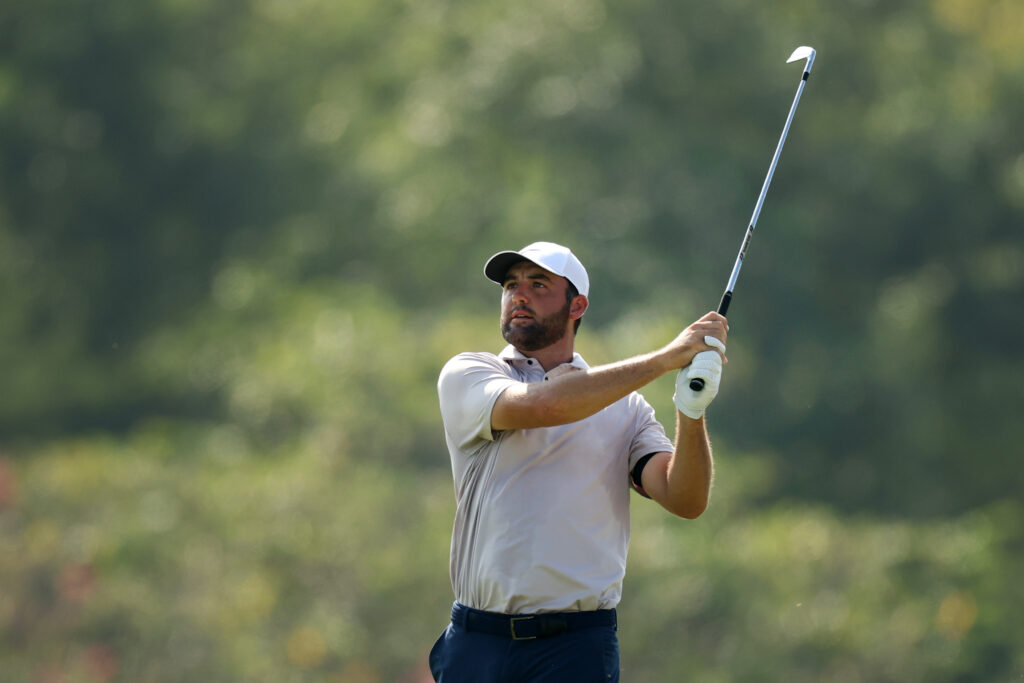
Scheffler’s first two tips to help amateurs improve their ball-striking came via an instructional piece that he wrote for Golf Digest.
Tip 1
I understand that when you watch a tour pro hit a 7-iron 200 yards, you want to go out and smash your irons, too. But to get the most out of these clubs, you should focus more on hitting the ball solidly than swinging all out. Quality of contact is the biggest difference between a tour player’s performance with an iron and an amateur’s—even a good club player. The sound coming off the club is just different.
So how can you improve consistency with your irons? Start with your backswing. My arms only swing back as far as my body can fully turn, and the back of my left hand matches the clubface. When the arms over-run your turn and you start twisting the clubface open with your hands, you have to spend the first part of your downswing getting reorganized just to make any contact with the ball.
Tip 2
Randy likes to tell me to stay balanced and think of the swing as a gathering of speed and flow down through an explosion at impact. There’s no slashing or jerking or twisting on the handle from the top. A good way to avoid that is to keep your lead arm soft, even having a slight bend in your elbow when you get to the top. When you’re relaxed, you’re less likely to jerk the club down.
Scottie Scheffler says it is all about playing percentages
The current world number one’s third and final tip to help you hit your irons more consistently came during a TaylorMade clinic.
Tip 3
“Basically, my thought process coming into the green is that I want to hit the highest percentage shot possible, that is going to get me, at the worst, on the green.
“For instance, a front right pin, If it’s 161 to that pin. It’s kind of an in-between number for me where I could hit wedge and it may get there, or it may not get there.
“But if I hit 9-iron, I know the ball is going to get there and it’s a lot easier for me to take some off than it is to add a bunch of yardage to a shot.“
Scheffler’s tip here is arguably the most important.
Unless you are a highly accomplished low-handicap golfer, you really don’t need to be firing at flags.
If the pin is cut on the front of the green, pull out a club that ensures you will hit your ball past the flag.
And vice-versa for pins which are cut towards the back of the green.
Course management can save you so many strokes, and it’s an extremely simple facet of the game to get right.
Why not try putting Scheffler’s golf tips for better ball-striking with your irons into practice the next time you take to the golf course.
Receive exclusive golf news and updates twice a week to your mailbox