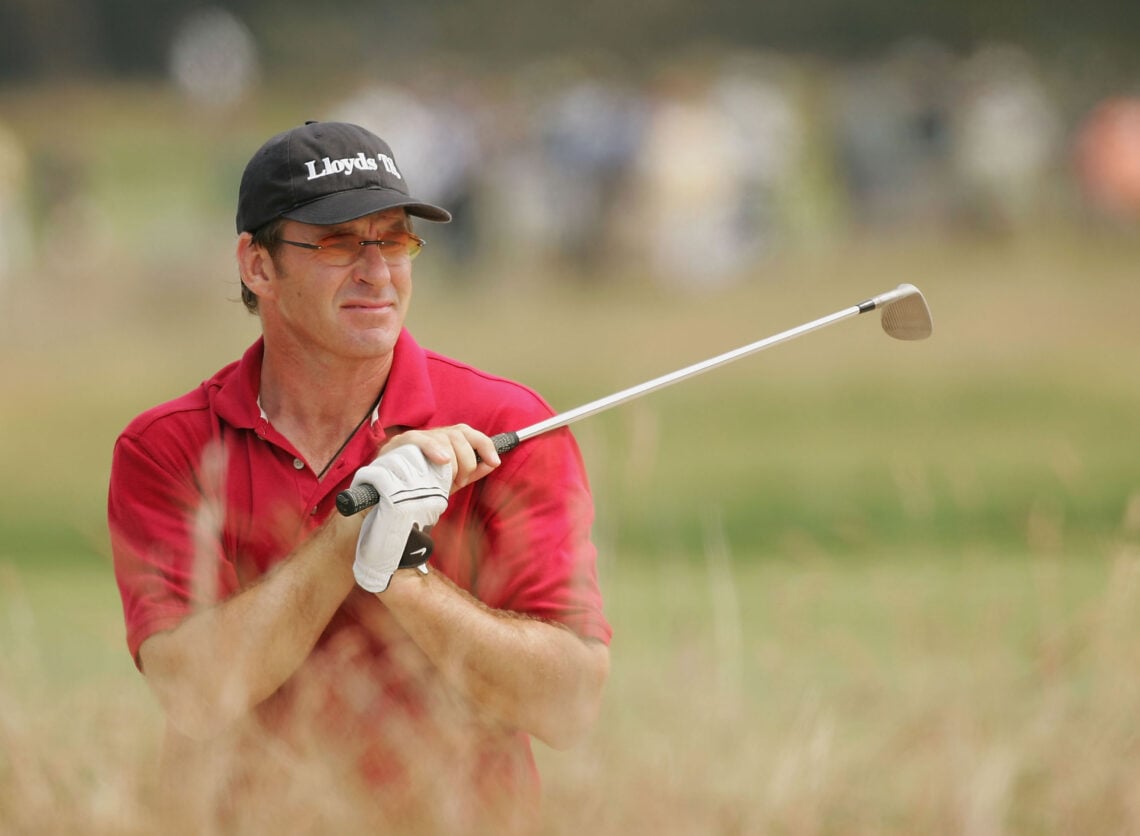

Sir Nick Faldo is unquestionably one of the most successful golfers over the past 40 years.
Only 11 golfers have won more major championships than Faldo throughout the history of the game.
The Englishman was always known as a prodigious ball-striker and his exceptional distance control with his irons was the bedrock of his success.
With that in mind, who better to pick up a few golf tips from than the six-time major champion?
Faldo has shared numerous golf tips for amateurs who are looking to improve their games throughout the years.
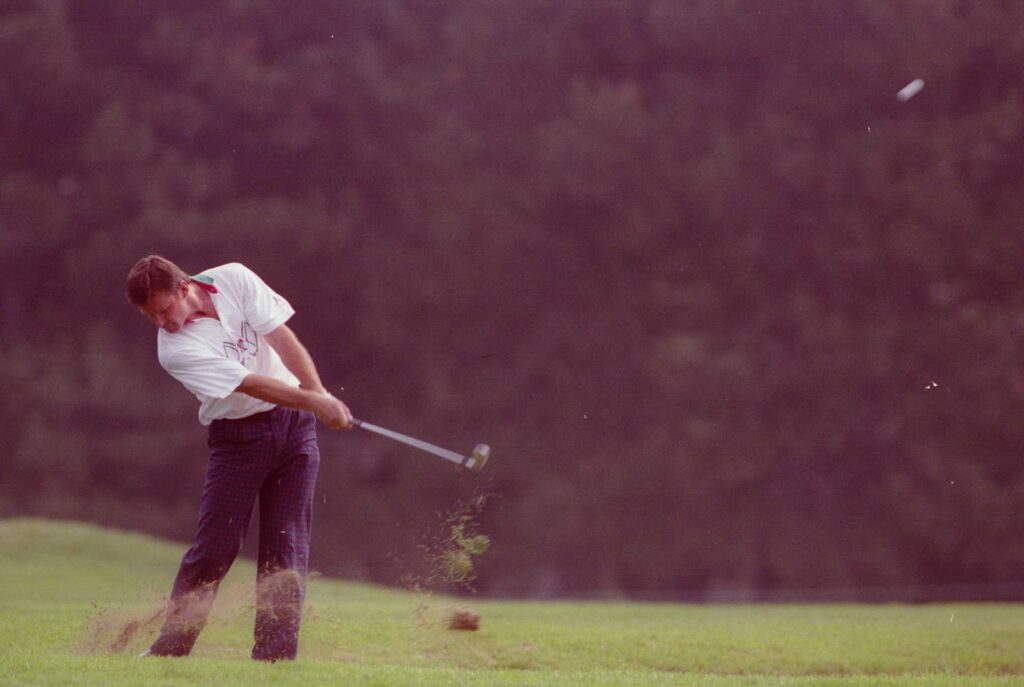
The now 68-year-old recently offered up some great advice for amateur golfers regarding how to improve the way they extricate their balls from the rough.
Nick Faldo’s advice for amateurs who struggle when hitting out of the rough
There are so many golf tips online but something that quite simply isn’t spoken about enough is how to improve when you’re faced with bad lies in the rough.
Thankfully, Faldo touched upon how to deal better with tricky lies in the rough, during an instructional video for Golfing World.
Do you think golfers should receive a free drop from divots in the fairway?
He said: “So how often do you practice hitting balls out of the rough? I bet very rarely. You need to get some feedback because it’s a different world. You’re in wet grass, how does the ball react, how does it fly and spin? All those sorts of things.
“If you’re playing a practice round for an event coming up, I used to tell my kids on the Faldo series, I used to drive it down the fairway and if the pin was on the left I’d kick it in the left rough. That’s the best way to learn because now it’s a really tricky shot, what can I do, how can I control the ball to get it on the green? So think about that to start off with.
“A few basic things what we’re trying to do. Number one, I played a fade out of the rough I bet 98 per cent of the time. Rarely, unless I really had to do something to hook it around a tree. But if it was a straightforward shot, I always played a fade because I wanted to get that steepness and hang on to the angle
“As you know, we always talk about it, the rough grabs the hosel, turns it over, and that’s how you get a mega flyer. That’s the number one thing you want to be looking for.
“You know, open the face up a little bit and think about, your goal is to get the heel of the club to the golf ball first with the face a little bit open.
“Then you want angle of attack. You want to be a touch steeper. A couple of ways you can do that is either put a little bit more weight on your lead foot and pick the club up and drop it down a touch. Or the way that you hang on to the angle, you don’t want to be releasing the club, you want to feel like as you pull down that club is staying high.
“I always wanted to feel as though my right shoulder got to the golf ball ahead of the clubface, so I was covering the ball. Then I would drive through it, rip through it and power it forward.“
Things amateur golfers need to be aware of when hitting out of the rough
Controlling your ball out of the rough is always more difficult than when you’re hitting from the fairway because more grass will wedge itself in between clubface and ball.
When your ball is sitting down, the general rule of thumb is that you should take one less club than you think, due to the fact that it will fly out of the rough with more top spin.
If you are a mid-high handicapper, you should always take your medicine, with limiting the possibility of a big number your primary concern.
However, if you are a more highly-skilled golfer, you can perhaps be more ambitious, if the lie allows you to be, of course.
The key thing to be aware of is to ensure that you don’t compound your errors. If the pin is cut tight on the left, give yourself plenty of leeway and more margin for error by aiming for the right side of the green.
Even scratch golfers only hit their approach shots to within 15 feet 20 per cent of the time when hitting out of the rough.
Bogey is not a bad score when you’re behind the eight ball and when you’re in the rough, damage limitation is the order of the day.
Receive exclusive golf news and updates twice a week to your mailbox