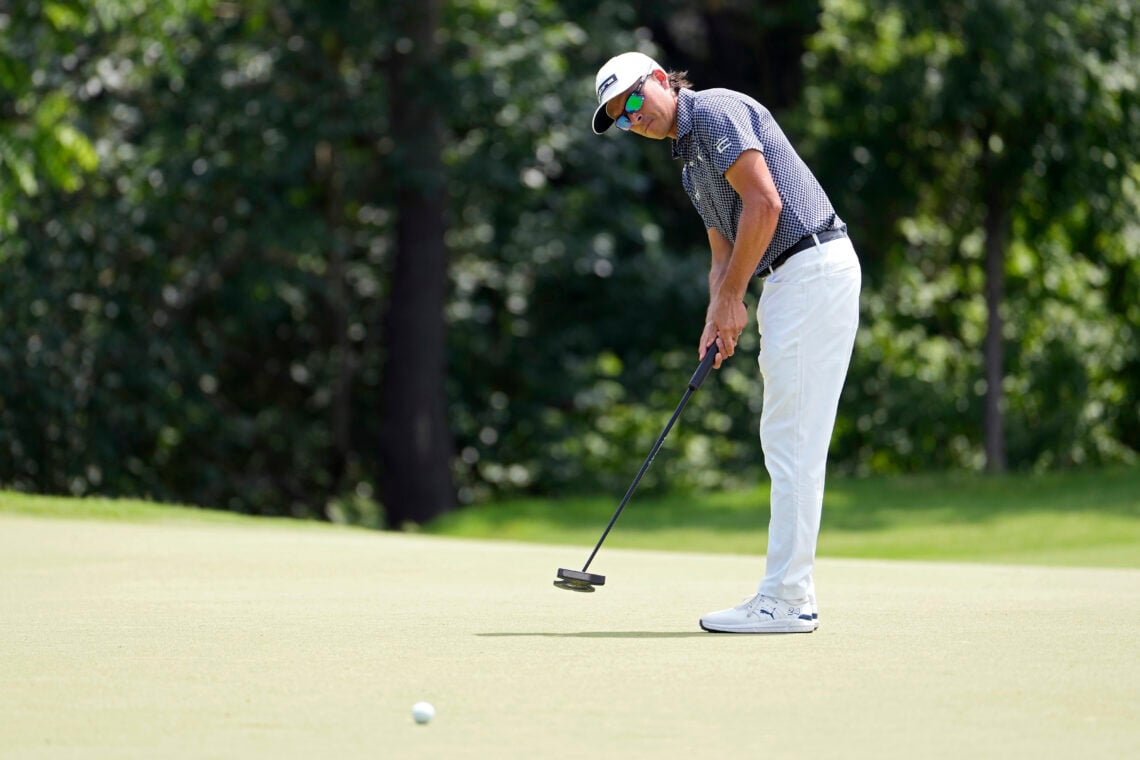

As the saying goes: drive for the show, putt for the dough!
No matter how much time you commit to the driving range when trying to improve your game, your score as an amateur golfer will typically live and die by the short game.
According to Gitnux data, amateur golfers three-putt approximately 20% of the time from 30 feet, and the probability that an amateur will three-putt from 15 feet is higher than the odds of making that putt.
And amateurs have real trouble adjusting to a breaking green. Statistics show that the percentage chance an amateur will make a putt from eight feet drops by 15% if the putt has more than two degrees of break.
That means a simple way for an amateur to get ahead of the field is to work on their distance control. If you can consistently putt the ball into tap-in range from distance, you’ll see your score come down exponentially.
Luckily, Rickie Fowler has some simple golf tips for amateurs on managing the weight of putts.
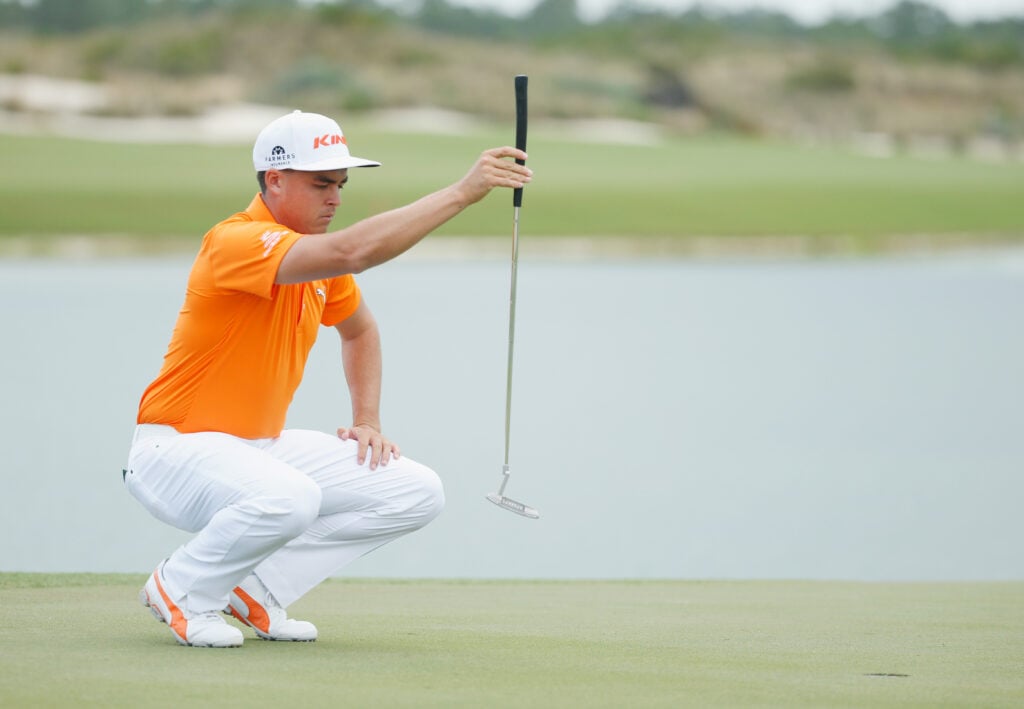
Rickie Fowler’s tip for controlling distance on the green
Fowler, who has mastered the greens at Augusta National, offers simple advice on managing distance control on the putting surface.
Speaking on meandmygolf, he said, “The biggest thing is hitting the ball solidly. That is probably, for me, the number one thing to controlling speed. If you don’t hit it solid, you’re going to get a pretty big dispersion.
“If you think you hit one too hard and then you try and lay off and you miss-hit that one, it’s a big gap. Or if you thought you hit one too soft, but it was actually the right stroke, you hit it thin. The next one, you hit it harder, and you hit it solid, and it’s gone.
“So, solid contact is what it comes down to, for me, and really, when it comes to a long putt, I’m really trying to think about just staying still and finding a way just to hit the center of the face. Because then there’s less dispersion there.
What is your craziest golf prediction for the 2026 season?
Our three BOLD golf predictions for 2026!
“There’s other stuff you can think about. Sometimes the longer pause, some people might go to a little more grip pressure to help with that. For me, I would say one of the things that I’m not a fan of, or when I see people, is they try and accelerate the putter.
“I’m a big believer in taking it back as far as you need to, to then have the speed created and then kinda short follow-through. It goes back as hard as it comes through, nothing ever increases or decreases.”
That’s similar to Tiger Woods’ putting advice. He said the best way to control speed is to decide on the length of your backswing, let the club fall, and let the ball stop the club. That way, you’re taking out as many variables during your putting stroke as possible.
Rickie Fowler tells amateur golfers how to read a green
Since amateurs have a hard time making putts with a lot of break, Fowler’s advice on how to read a green could also be key to reducing the number of three-putts in your round.
The American explained why it all starts on the walk up to the green: “Depending on where we’re coming in, say we’re walking up the green, this is a back-right pin. I would start looking at what’s going on with the green as soon as I’m getting up to it and walking up to where my ball is.
“Just so you have an understanding, this idea of where we’re at, what’s going on, and then from there I’d try and, the most that I can, I’ll stay underneath the putt, on the low side, and really start from behind the hole.
Which four players do you choose?

“Get a good picture of where I think that the ball should enter the hole. For me, from there, based on that I can then match up speed-wise and start drawing lines of, ultimately, where I want this ball to roll.
“Which then gives me kind of a start point and then after that, all you’re focusing on is hit it solid first, but speed to really try and match up those lines.”
For Fowler, it’s all about visualization, a powerful tool that anyone can apply to their putting. Start at the hole and imagine the line back to your putter, and you might be surprised by how many putts start to drop!
Receive exclusive golf news and updates twice a week to your mailbox