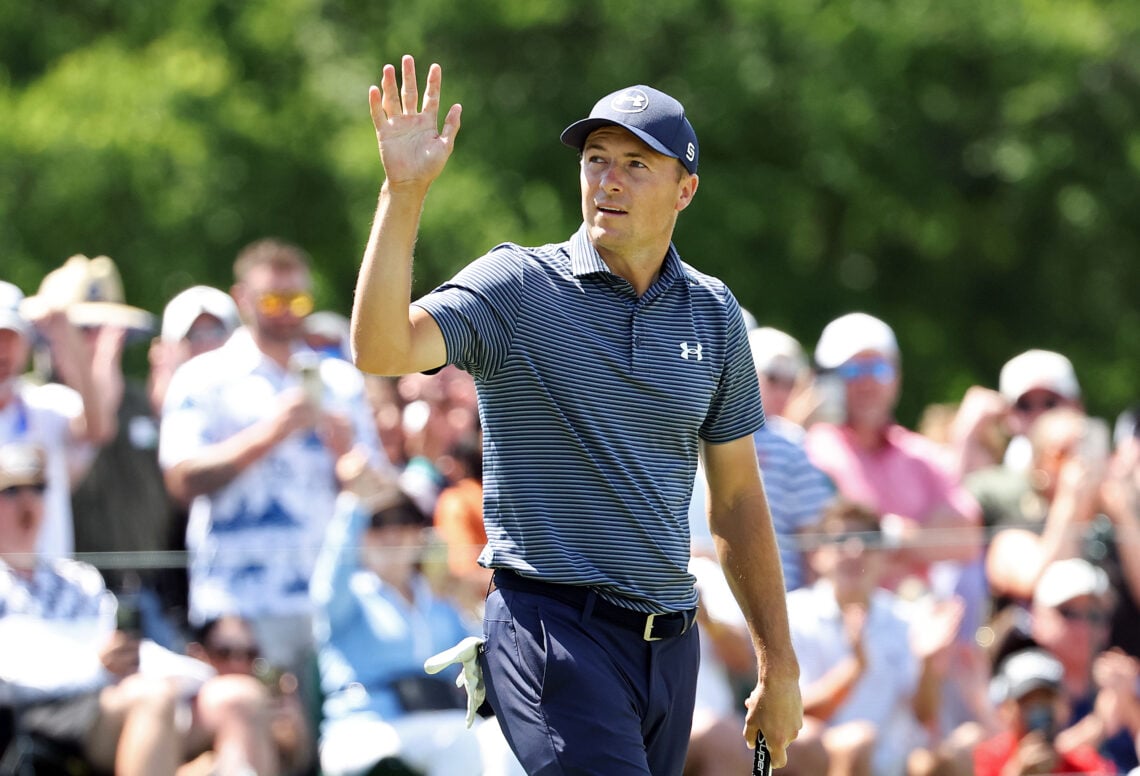

Jordan Spieth has achieved huge success throughout his career on the PGA Tour.
In spite of Jordan Spieth‘s recent struggles, he is still one of the biggest needle-movers in the professional game.
On his day, he is a match for anyone, so it goes without saying that any golf tips he has to offer should be grasped with both hands by amateurs who are looking to get their handicaps down.
Spieth has provided plenty of golf tips throughout the years and his wealth of knowledge about the game really is remarkable.
What do you think is the real reason why Jordan Spieth has not won on the PGA Tour since 2022?

The Dallas native is a real student of the game and he is constantly in dialogue with his coach, Cameron McCormick, regarding potential ways to improve.
Now, every amateur looking to better themselves as golfers can all learn something from Spieth.
Jordan Spieth’s three best tips to help amateurs lower their scores
The three main keys to shooting lower scores, according to Spieth, are driving, approach play and putting.
There is an argument to be made that pitching and chipping is just as crucial as everything else, but Spieth has chosen to stick with driving, iron play and putting as the magic formula.
Back in 2015, Spieth wrote an instructional column for Golf Digest, explaining the three things that amateurs must improve if they are to shoot lower scores and subsequently reduce their handicaps.
Driving
Start by picking a landing area for your tee shot—one you can realistically reach. This area should provide the best chance at hitting the green in regulation. With that in mind, a good driving zone often isn’t just the fairway. For example, on a dogleg-left the first cut of rough on the right is probably a great angle into the green.
Once you have your target, focus on rhythm and tempo. It’s tempting to try to hit the driver as far as possible, but save that for the par 5s. A smoother, more controlled tee shot that finds the target area is going to increase your chances of making a good score.

What if you hit it wild off the tee? Switch gears, and get into damage-control mode. This is the time to follow the three-shot rule: You never want to take more than three shots to reach the green on a par 4. Use the second shot to get back in a good position, then knock the third on. Anytime you’re putting for par on a par 4, you can still help your score.
Iron play
If you don’t hit your approach shots solidly, you’re going to struggle scoring on par 4s. Good contact is a function of knowing where your club will hit the ground. My swing coach, Cameron McCormick, likes to call this “low-point control.” If you can consistently make ball-first contact, then take a divot, your distance and accuracy will skyrocket—I promise you.
One key to having low-point control is keeping your head and posture steady. For most amateurs, this means resisting the urge to stand up.
You also need to keep your arms extended through the impact zone. If your arms are bent as you approach the ball, you’re going to have to make some drastic adjustments with your body to achieve any sort of contact. Feel your arms stretching at the elbow joints as you swing down and through the ball.
One more tip: While you’re waiting to hit, make a few practice swings trying to bottom out the swing in the same spot. Pick a mark on the ground to represent your ball position, and try to strike the ground a few inches in front of that mark (above). Then copy those swings when it’s your turn to play.
Drive for show, putt for dough: Spieth tips for ‘owning par 4s’
Your putter can be the secret weapon in your bag, if you practice hard and smart enough.
Do you think Jordan Spieth will be deserving of invites into the signature events in 2026?
The flatstick is a great equalizer and it can make up for even the worst ball-striking rounds.
Spieth has some great advice regarding what amateur golfers should be practicing on the greens before they head out to play…
Putting
Assuming you didn’t hit all the par 4s in regulation, you’re going to need to putt well to shoot a good score. This is where something Cameron and I call “force control” comes into play. It’s all about training your mind to hit putts at the right speed (below). You’ve probably noticed me in tournament rounds looking at the hole on shorter putts—during the stroke. That helps me control my line and speed. But whether you look at the ball or the hole, you need to know how much force is needed to give the putt a chance.
Before the round, don’t waste your time mindlessly hitting four-footers on the practice green or thinking about your stroke. Instead, hit 15-footers at various speeds. The first putt should barely reach the front edge. The next one should stop just past the hole, and the next should split the difference. Spending 10 minutes doing this—trying to make these subtle adjustments in distance—will help you lock in your speed for the round. You’ll own the par 4s.“
If you follow Spieth’s advice on how to drive the ball better, hit crisper iron shots and roll your putts with more consistency, you will be on the road towards playing better golf more regularly.
Receive exclusive golf news and updates twice a week to your mailbox