
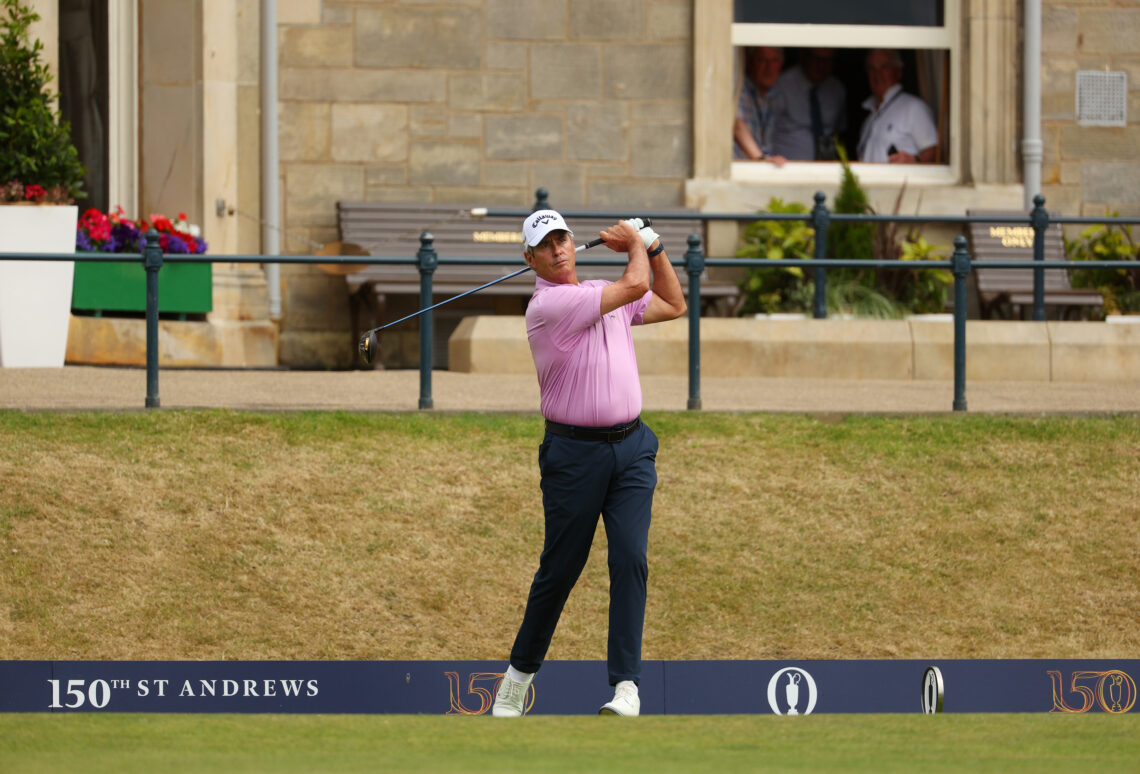

When Ian Baker-Finch was at the peak of his powers, he was one of the best short game players and putters around – with the high point of his playing career coming with his victory at the 1991 Open Championship.
The Australian was hugely successful worldwide, winning at the highest level in the United States, Europe, Asia, and Australasia.
What is your craziest golf prediction for the 2026 season?
Our three BOLD golf predictions for 2026!
Unfortunately, Baker-Finch is also known for enduring an agonising end to his playing days. He began to suffer from the yips with his long game.
He missed 10 cuts in a row in the majors between 1994 and 1996. And after withdrawing from the 1997 Open Championship, Baker-Finch emotionally decided to retire from tournament golf at the age of 36.
The mistake Ian Baker-Finch says amateurs often make when putting
Nevertheless, Baker-Finch was arguably one of the best putters of his generation.
With glove on – yes, inspired by Jack Nicklaus – Baker-Finch possessed one of the most aesthetically pleasing putting strokes in the game.
Certainly, few players have looked as smooth on the green as Baker-Finch.
And speaking on the Talk Birdie To Me podcast, he explained how he honed his craft. He also shared the mistake that most golfers will tend to make when it comes to putting.
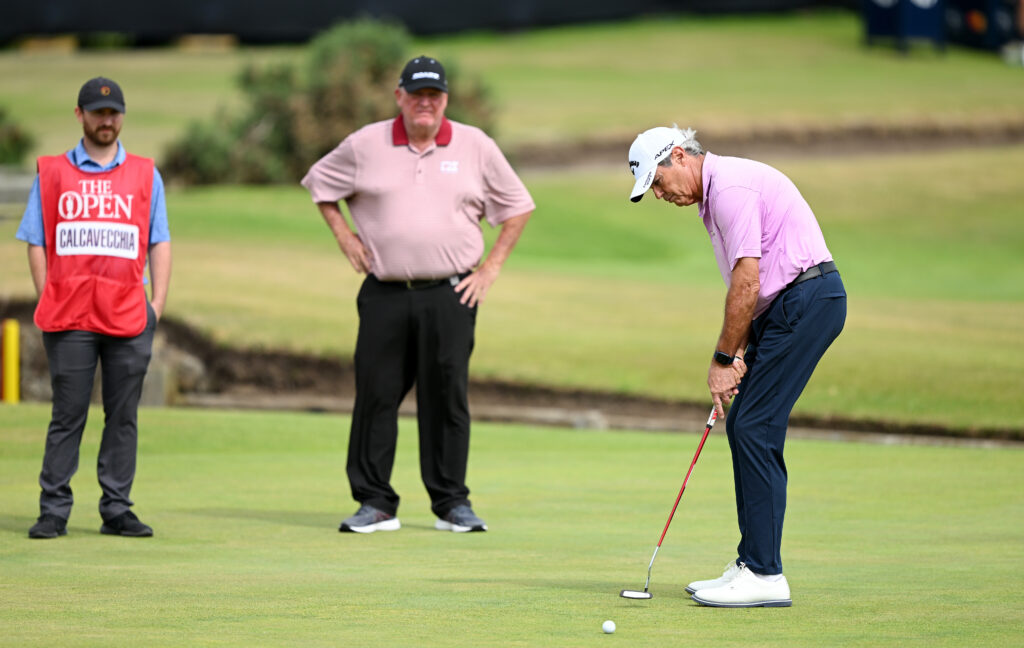
“Anything in golf, your setup and routine is up to you. There are no excuses, it’s just you. So if you can set up perfectly and aim perfectly, there’s not a lot that can go wrong. So I simplified everything down to those key facts,” he said.
“My setup has always been perfect. My stroke is good, solid. I’m confident. And when I do putt well, my hands are soft. Putter grip works, flows, whatever. But it all comes back to the basics and alignment and setup. And then positive thinking, seeing the ball rolling in rather than worrying how it’s going to miss.
“Things like that make you a good putter. People work too much on stroke, and worry what they’re doing perfectly when if you set up perfectly, which is up to you, not a lot can go wrong. You’re only taking it back 30 centimetres and through 30 centimetres. There’s not a lot that can go wrong if you’re staying still and positive.”
What Jack Nicklaus said about the mental challenge of putting
It will not come as a surprise to hear that Baker-Finch’s hero Jack Nicklaus had a similar approach to the mental side of putting.
Of course, the most iconic shot of Nicklaus’ career was arguably the putt on 17 on Sunday at The Masters in 1986.
Who do you think is the most influential golfer of all-time?

And as reported by Golf.com, the Golden Bear never wanted to give any time to the idea that he may be about to miss a putt and what the implications would be.
“My long-time coach, Jack Grout, always said, ‘Soft forearms, Jackie-boy. Soft forearms.’ Great advice for maintaining constant grip pressure. From there, ‘I never missed a putt in my mind.’ it’s a mindset. For many years I wanted putts to go in,” he said.
“As I matured as a player, my thought process became ‘this has to go in.’ Reminding yourself that every putt is an opportunity for a make is powerful stuff. Invite visions or thoughts that inspire makes, not misses.”
Obviously, it is much easier said than done to be particularly confident over putts. But clearly, belief and momentum play such an important role in improving on the greens.
Receive exclusive golf news and updates twice a week to your mailbox