
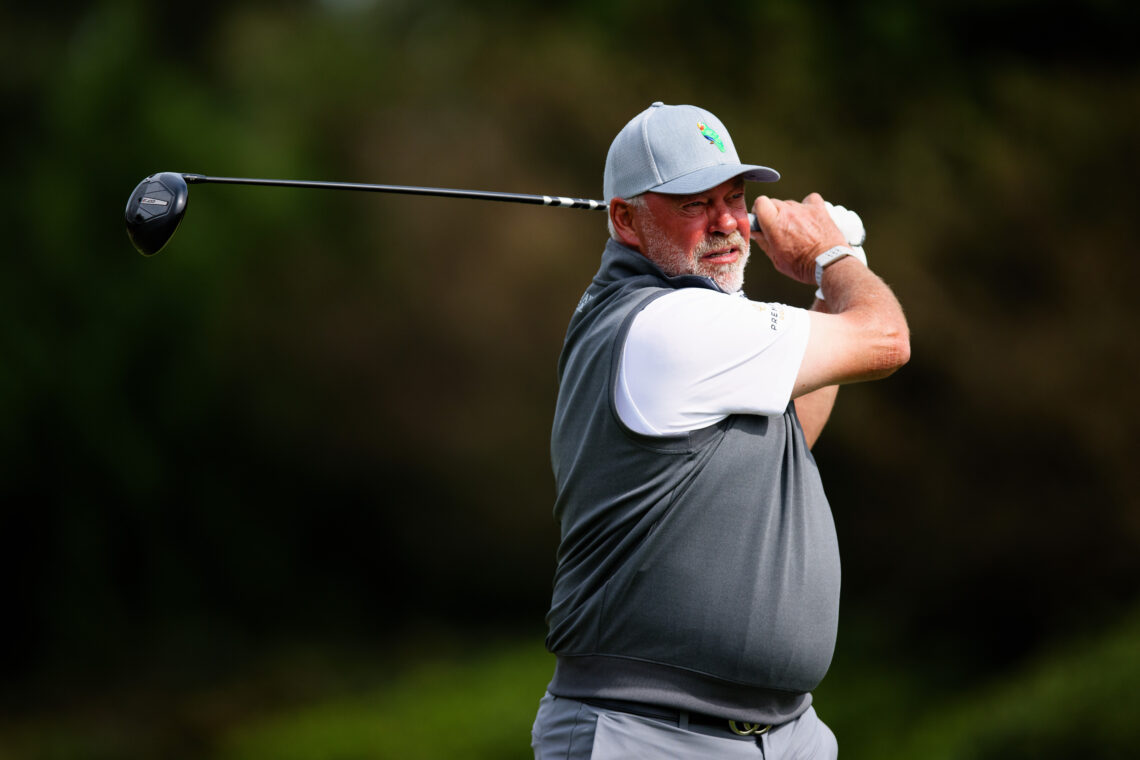

It is fair to say that a golfer who can control their emotions on the course is much more likely to enjoy long-term success than a player who loses their cool after every disappointing shot.
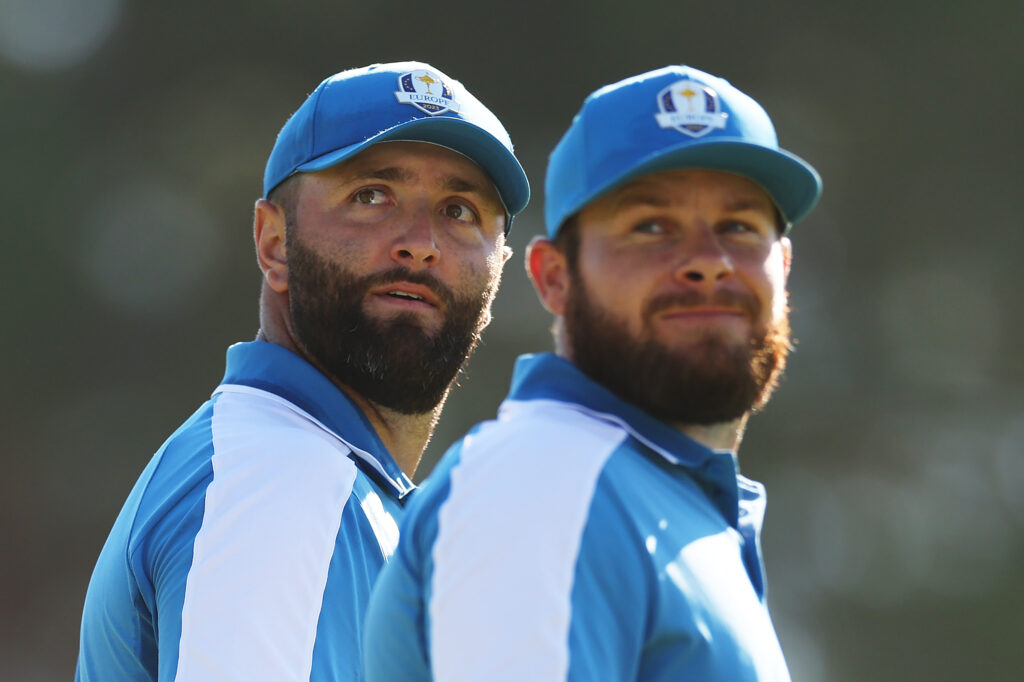
Of course, there are exceptions. The likes of Jon Rahm and Tyrrell Hatton appear to have found ways to utilise their frustration in a positive manner.
Should Jon Rahm and Tyrrell Hatton be allowed to play at the 2027 Ryder Cup?
But most amateur golfers are simply not good enough to lose their head and then respond with a brilliant recovery shot moments later.
So perhaps those players who have a tendency to get angry first before feeling embarrassed later should take note of a routine Darren Clarke has used during his career.
Darren Clarke suggests the mistake he sees many amateurs make over the ball
Clarke is a major champion after winning The Open Championship in 2011, while he was the reluctant star of the show at the 2006 Ryder Cup – his fifth appearance in the event.
His most famous win as an individual – other than his Open triumph – surely came in 2000 when he took down Tiger Woods in the final of the WGC Match Play.
And speaking on 5 Clubs this week, Clarke explained the method he would use which would help him deal with poor shots.
He also suggested how the method in question would help a lot of amateurs with a common mistake he sees at address.
“We did this thing with Karl [Morris]. I used to practice this on the range, I’d put an alignment stick maybe three foot short of the ball and then an alignment stick three foot past the ball, or when I was playing practice rounds,” he said.
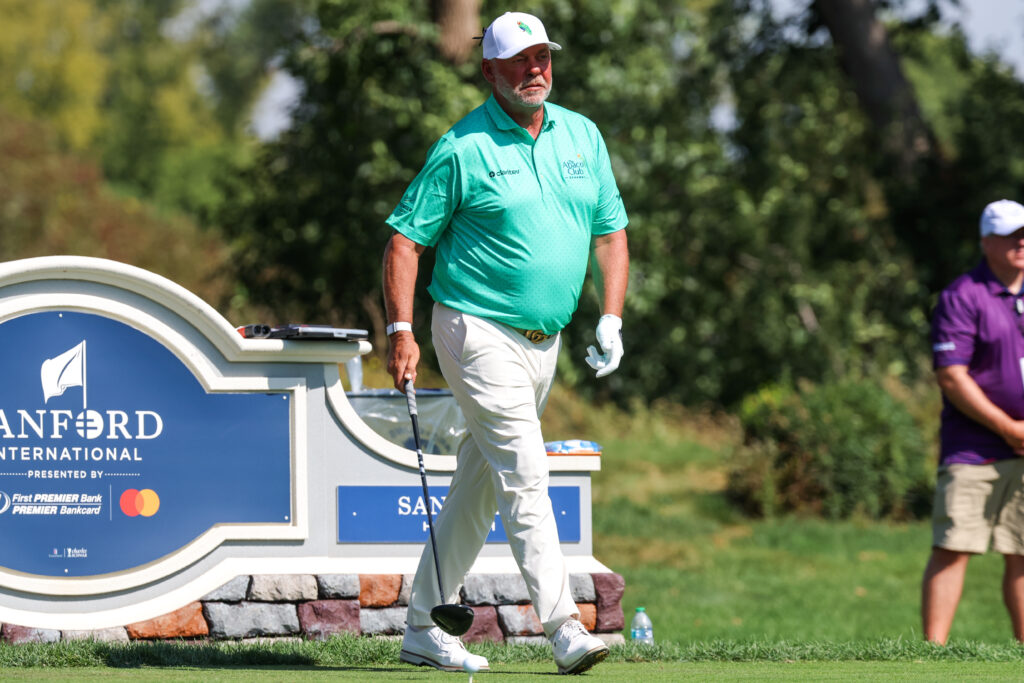
“You would get behind with your caddie, pick out your number, do what you’re doing, especially on the golf course, what club is it? So you’d take a couple of practice swings behind the back alignment stick. Right, this is the feel, I’m going to hit a little hold, I’m going to hit a little draw, I’m going to flight it this way, so you picture everything, it’s all part of what we do. And then when you cross that line, when you step into the ball, you’re there and you’re in the play box.
“Most amateurs that I play with, they tend to take too long over the golf ball. The longer you are over the golf ball, the more you have the opportunity of the little guy on your shoulder chirping away, ‘don’t hit it in the water, don’t hit it here, don’t hit it there’, and all that stuff.
“So Karl’s theory which was very good and still to this day works, when you step in that player box, you get yourself set, you have one look and go. And then wherever the ball goes, if it’s not finished where you want it to go which a lot of the time it doesn’t; if it’s a decent shot, great, if it’s a bad shot, you’re allowed to semi lose your stuff. But then when you cross that forward one, it’s gone. It’s absolutely gone. You get into it.
“You’ve got to take a look at the greats of our era, Tiger was unbelievable at that. Tiger, as good as he was, hit some of the most amazing shots, but Tiger, when he was a little bit off would also hit ones that were a little bit askew. He was annoyed at the time, but he crossed that line and then he was right back into, ‘right, what do I need to do from here?’
“It’s basically a case of you do your prep before you cross the line, get yourself ready, step in and go. The longer you spend thinking about it, it doesn’t necessarily mean it’s going to be a better shot. Most amateurs would benefit from taking a look, hitting it and just accepting where it goes and going to hit it again.”
How Tiger Woods produced the greatest display of ball-striking Darren Clarke had ever seen
Clarke will be one of the players hoping that Woods will be playing on the PGA Tour Champions in the coming months.
While he got the better of him in California 25 years ago, Clarke was clearly in awe of what the American was capable of at the peak of his powers.
In the same interview, the 57-year-old explained how Woods produced one of the most impressive performances he had ever seen – on the practice ground before a round.
“It was unbelievable. Back in those days, it was one of the big tournaments that we had over in Europe. And Tiger, we were both being coached by Butch Harmon, and I got on great with Tiger, he used to rip into me and I used to rip into him. So whenever he came over to Europe, he would always find where I was and stand beside me and give me dog’s abuse and I would give him dog’s abuse,” he said.
“But in those days in Germany, they weren’t allowed to use pesticides on the golf course. And it had been raining, as you say. It was wet. There were little worms coming up and all that stuff. And Tiger went through his whole bag and just flushed every shot. He called me a really bad name and disappeared off to the first tee.
“And I looked at his divot pattern, and it was like a dinner plate, a round dinner plate. There was no mud. You couldn’t see any mud. It was just grass that was brushed, which is really hard to understand.
“Even lob wedges, wedges, everything, he just took everything off the top and absolutely flushed every shot. I’ve never seen it before and I’ve never seen it since. It was the most amazing display of ball-striking that I will ever see. But that was Tiger. That was a once in a lifetime thing that I witnessed and was there to actually see.”
It is probably no surprise that Woods did not find it too difficult to keep his emotions in check then.
Receive exclusive golf news and updates twice a week to your mailbox