
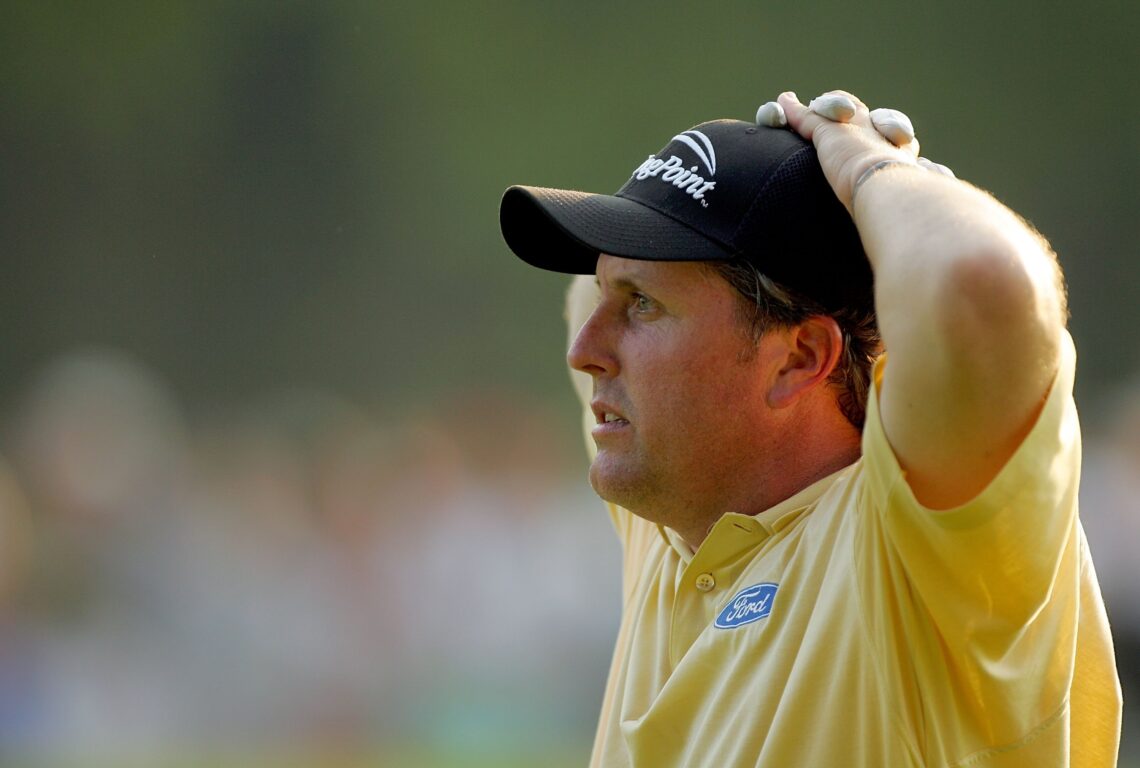

When the lights shine the brightest, players either thrive or crumble.
It’s part of what makes sport so great. We see some of the biggest talents on the planet in pressure-cooker environments and see if they sink or swim. When the hands get shaky and legs start to wobble, can you hold your nerve and perform?
It’s part of what made Tiger Woods so brilliant. His steely composure under pressure allowed him to dominate the sport like no one we’ve ever seen.
For some, it’s not so simple, like Rory McIlroy, who had to overcome his obvious nerves on the last nine to win the Masters and complete the career Grand Slam.
McIlroy, through ups and downs, got that victory over the line, but others haven’t been so lucky. Here, we look at five of the biggest collapses in major championship history.
Rory McIlroy completed the career Grand Slam with his 2025 Masters win
Phil Mickelson at the 2006 US Open
Phil Mickelson is a US Open away from the career Grand Slam, and in reality, he should have already won it. He has been a runner-up at the US Open a record six times, and Mickelson threw away the 2006 tournament at Winged Foot on the final hole.
Mickelson led by one going into the 18th. But instead of playing safe and hitting an iron off the tee, Mickelson went driver. It was a decision he would immediately rue. His drive sliced left and smashed into the hospitality tent.
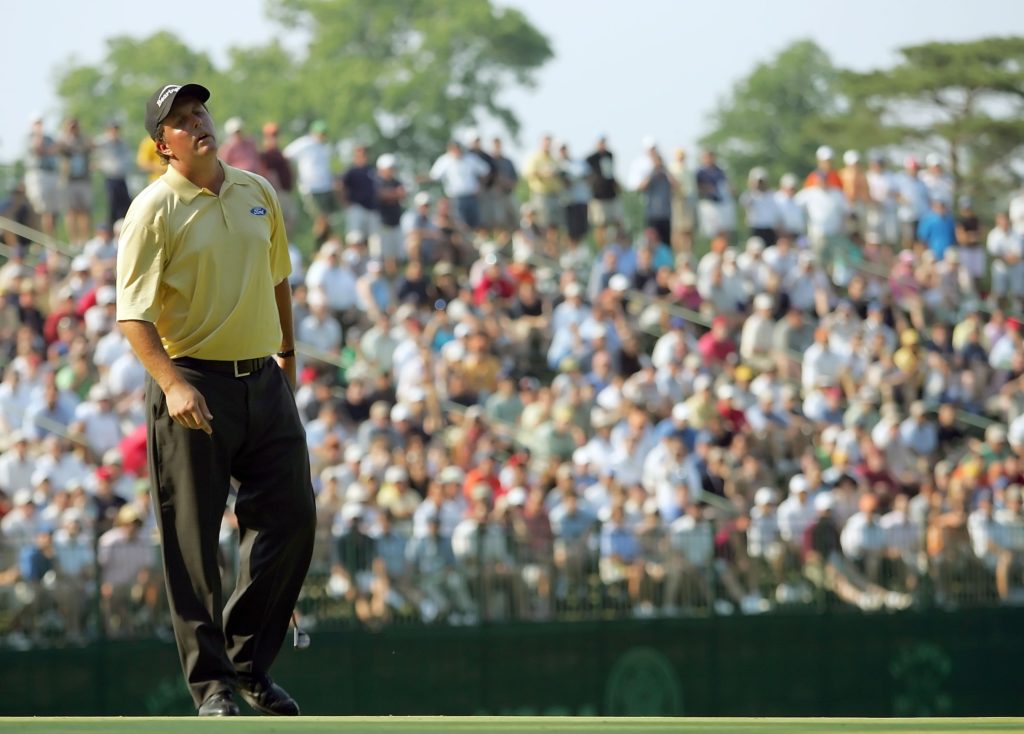
Then instead of taking his medicine and chipping onto the fairway, he aggressively went for the green. Mickelson’s ball went just 25 yards after it hit a tree.
OK, still alive. Now just hit the green and two-putt Phil. But no. He missed the green and ended up in a bunker. In his spiral, Mickelson then hit his long bunker shot off the back of the green, and missed the following chip-in attempt to throw away the tournament to Geoff Ogilvy.
“I’m such an idiot. I just can’t believe I did that,” was his reaction afterwards. Neither could we.
Jordan Spieth at the 2016 Masters
In 2016, Jordan Spieth should have become the first back-to-back winner of the Masters since Woods, but instead, he threw away the win on the last nine at Augusta National.
He had opened up a five-shot lead by birdieing the last four holes on the front nine, and looked to be cruising to his second Green Jacket. Then it began.
Jordan Spieth fitness update ahead of the 2026 PGA Tour season
Spieth’s Masters collapse started on the 10th, when he bogeyed that hole, and the following 11th. And he crumbled on Amen Corner. On the famous 12th hole, a par three over water, Spieth found the water twice to make a quad bogey. Just like that, his lead had evaporated.
The field came together, and as Spieth fell apart, Englishman Danny Willet seized the initiative and became an unlikely winner.
Jean van de Velde at the 1999 Open Championship
French golfer Jean van de Velde looked to be writing his name into the history books for all the right reasons, with one hand on the Claret Jug on the 18th hole at Carnoustie. But instead, he’s remembered for having one of the biggest capitulations in sporting history.
He led by three shots (yes, three shots!) going into the final hole. A double bogey and he would be an Open winner for the first time, and he’d never even sniffed a major championship. So why did he have to pull a driver off the tee?
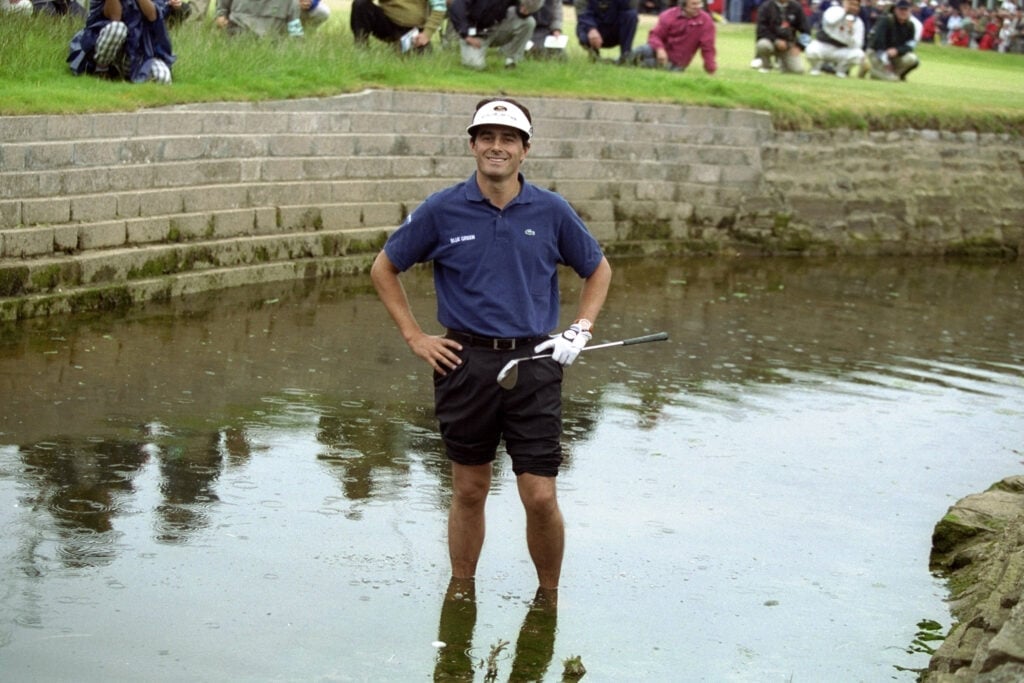
He mis-hit his drive onto the 17th hole. Not an ideal start, and it clearly rattled him, because Van de Velde then hit a 2-iron that smashed into a grandstand railing and fell into the deep rough. Not having learned his lesson, he then hit a shot into the water.
At this point, Van de Velde’s brain appeared to have short-circuited, and he rolled up his trousers and waded in. He set up to take a shot out of the water before eventually deciding against it.
He instead took a drop, got in for triple, and lost the resulting three-way playoff to Paul Lawrie. It doesn’t come much worse than that. It was the worst Open Championship collapse ever.
Greg Norman at the 1996 Masters
Greg Norman, twice an Open Championship winner, never won the Masters, but he did have one of the most iconic collapses ever at Augusta.
The Australian held a six-shot lead going into the final round, setting up a cruise home to the finish line. But he threw it all away in the largest final-round lead blown at The Masters.
How long should an 18 hole round of golf take?

As his playing partner, Sir Nick Faldo, was on fire, shooting an incredible 67 on his way to his third Green Jacket, Norman shot a six-over 78. He found the water on Amen Corner, as so many have before and after him, and on the 16th hole in a slow, agonizing breakdown.
Having started six shots ahead, Norman lost by five strokes to Faldo on a disastrous Sunday.
Arnold Palmer at the 1966 US Open
Arnold Palmer’s meltdown at the 1966 US Open bettered Mickelson’s as the biggest collapse in the tournament’s history. He had a seven-shot lead entering the back nine before throwing it all away.
“The King” was typically such a cool customer in these situations, allowing him to win seven majors in the past. He hadn’t won on the big stage in four years and looked to be cruising to the win. But then disaster struck.
He bogeyed 10, 13, and the par three 15th, while Billy Casper went on a charge to cut the lead to three. A birdie-bogey swing on the 16th then made the difference one, and another Palmer bogey on 17 made it even going to the last.
Palmer nearly threw it away on the last, but went up and down from the rough to force a playoff, which was played the next day. Again, Palmer led on the back nine, but again he melted down. He bogeyed 14 and 15, then had a double on 16, effectively gifting the victory to Casper.
For a serial winner, it was one of the biggest collapses in golfing history.
Receive exclusive golf news and updates twice a week to your mailbox