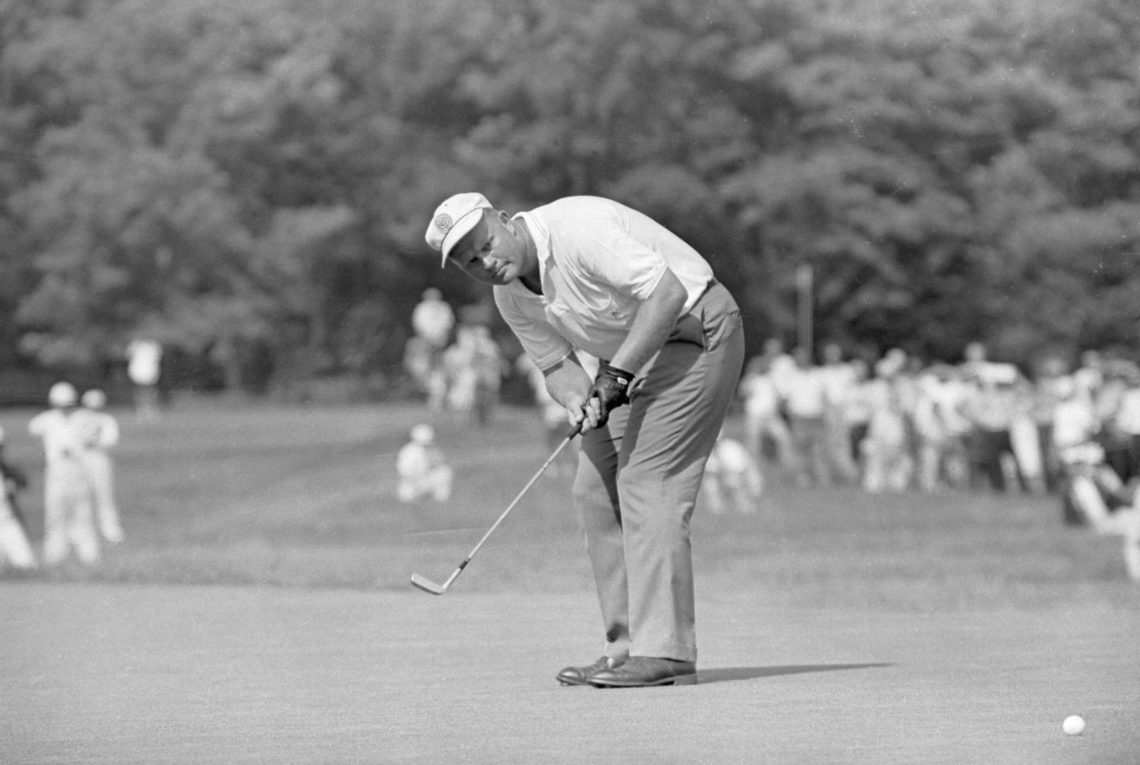

When people opt for Jack Nicklaus as the greatest golfer of all-time, they not only reflect on the 18 majors he did win, but they will usually note that he also finished second 19 times in the sport’s four biggest events.
Jack Nicklaus won the first of 18 majors in 1962 at the US Open. However, he had already been threatening greatness for some time by that stage. That US Open was his sixth major start of the decade, and he had finished no worse than in a tie for 15th in the previous five appearances.
In fact, many would have expected that that first major would have come a couple of years earlier.
Nicklaus went into the final round of the 1960 US Open at Cherry Hills Country Club in a tie for fifth alongside Ben Hogan. However, as he made the turn, Nicklaus – who was still an amateur at the time – was leading by one.
How losing the 1960 US Open was the most important moment in Jack Nicklaus’ career
However, a poor putting display on the back nine, coupled with a stunning round of 65 from Arnold Palmer – who was outside the top 10 before Saturday afternoon’s final round – meant that Nicklaus had to settle for his first runner-up finish in the majors.
Nevertheless, speaking to Charlie Rose in 2013, Nicklaus noted how important that experience was for him, particularly after teeing it up with Ben Hogan for that final round.
“Incidentally that was the best thing that ever happened to me,” he said.
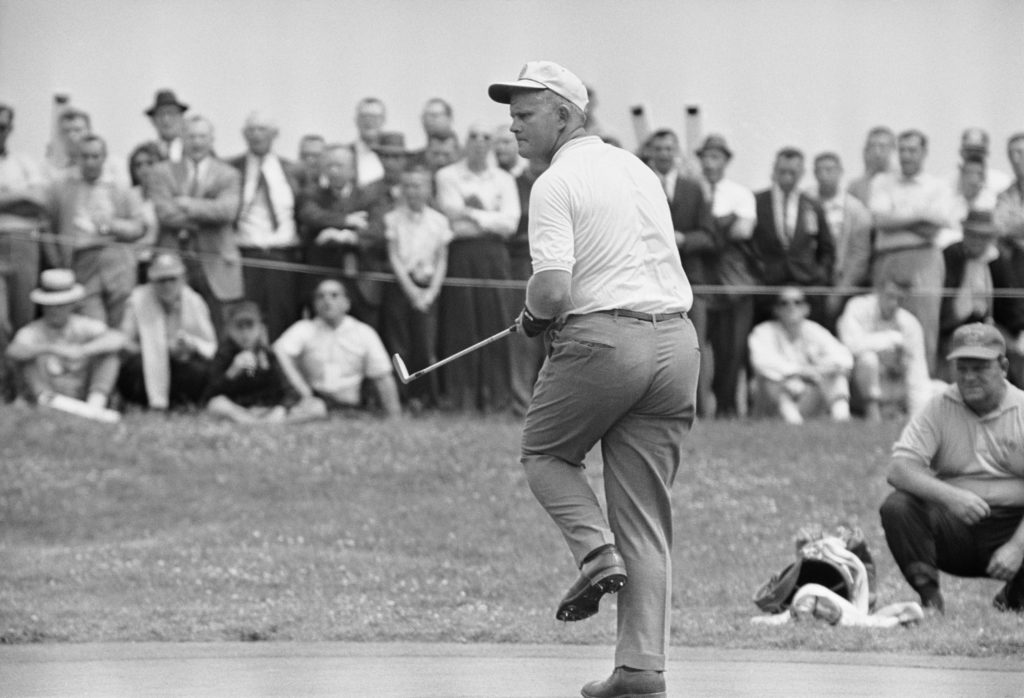
“I learned so many lessons. I got to play with Hogan. I saw how to finish a tournament. I learned the mistakes that I made. If I had won that tournament I never would have found all of the mistakes I made which I never really repeated in my career.
“I mean I had a one-shot lead but I was leading after nine holes – with nine holes to play. At the end 12 holes and six holes to play I had a one shot lead. I looked at the leader board, I started worrying about Hogan, Palmer, Croll, Cherry, Souchak, those were the ones who were on lead, all four under and I was five under and I got nervous on the next hole and I had a little – and I had a 12 foot putt for birdie and ran it that far by the hole and I had a ball mark in my way.
“And I didn’t have the presence of mind to know that I could fix a ball mark. I know it wasn’t my – but you’re not thinking clearly. So I three putted that, three putted the next green. There’s a little putt like that at the 16th, I miss on at 17 and bogeyed 18 to lose that tournament. You know Arnold won the tournament, that’s fine. Hogan, he self-destructed on 17 and 18 but all those things and if I had won that tournament I said, oh boy, I’m really good. You know, and I wouldn’t have – I really have learned the lessons, I wouldn’t have had to learn how to do different things and it really was – it was one of the greatest things I’ve had in my career; a great experience playing with Hogan.”
How Nicklaus would get revenge on Arnold Palmer two years later
As mentioned, Nicklaus’ wait for that first major would last just two more years. His maiden victory would come at Oakmont in 1962. And funnily enough, it was Palmer who the Golden Bear would beat in a play-off to secure the title.
Nicklaus took the lead on the opening hole of the 18-hole play-off, and he would never relinquish it as Palmer went on to finish at three over par.
And it seems that Palmer was well aware of what was coming as he claimed after Nicklaus’ win: “Now that the big guy is out of the cage, everybody better run for cover.”
Receive exclusive golf news and updates twice a week to your mailbox