
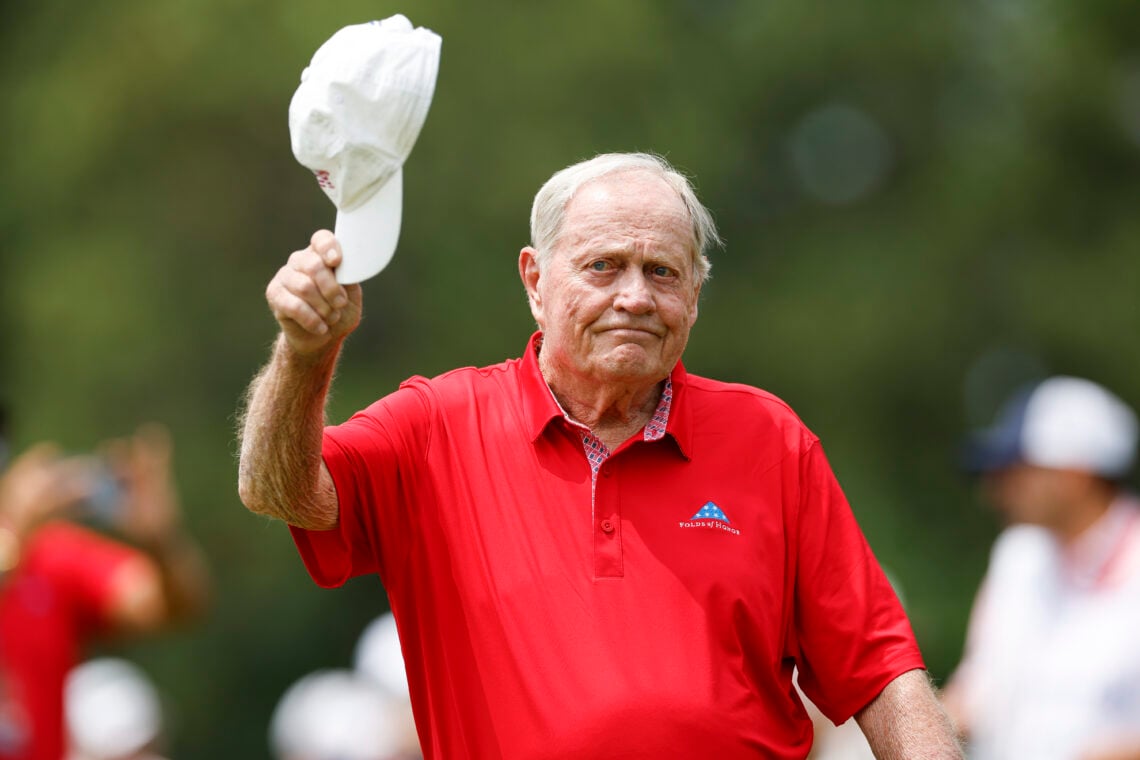

Jack Nicklaus, the Golden Bear, is golf’s all-time leader in major championship victories. He won the most green jackets of any player and won 73 times on the PGA Tour.
But what if he never existed? Jack Nicklaus is the most influential person in golf’s history, even more than Tiger Woods. The impact that he had on professional golf, the Ryder Cup, golf course design, and inspiring generation after generation of players is unrivalled.
And for every tournament that he won, there was a second-place finisher who could do nothing to stop him. Players who could have won multiple majors but didn’t because of Jack. Players who would have been Hall of Fame players, but instead were nearly-men because of Jack.
So today we’re asking the question, what if Jack Nicklaus never lived?
How removing Jack Nicklaus affects the majors
First, let me explain the rules. I’m taking Nicklaus away from every tournament he ever won. Every player who came in second gets a win added to their tally, and every player who came tied second gets a half-win.
So let’s get started with the obvious. Without Nicklaus topping the major wins table, Woods becomes the all-time leader in major championship victories.
| Rank | Player | Major wins without Jack Nicklaus |
| 1 | Tiger Woods | 15 |
| 2 | Walter Hagan | 11 |
| 3 | Arnold Palmer | 9.5 |
| 3 | Gary Player | 9.5 |
| 5 | Ben Hogan | 9 |
| 6 | Tom Watson | 8 |
| 7 | Harry Vardon | 7 |
| 7 | Bobby Jones | 7 |
| 7 | Gene Sarazen | 7 |
| 11 | Sam Snead | 7 |
| 11 | Lee Trevino | 6 |
| 11 | Nick Faldo | 6 |
| 14 | Phil Mickelson | 6 |
| 14 | John Henry-Taylor | 5 |
| 14 | Byron Nelson | 5 |
| 14 | Peter Thomson | 5 |
| 14 | Seve Ballesteros | 5 |
| 14 | Brooks Koepka | 5 |
| 14 | Rory McIlroy | 5 |
| 20 | Raymond Floyd | 4.5 |
Yes, a lot of Woods’ motivation came from chasing the ghost of Nicklaus, but it’s hard to imagine he doesn’t get to at least 12, which would make him the all-time leader ahead of Walter Hagen.
Meanwhile, with two and a half more victories, Arnold Palmer brings his career tally to 9.5, and moves ahead of Ben Hogan and level with Gary Player, who adds a half-win to his tally.
But the most interesting part of this list is actually way further down, because one of the biggest losers of removing Nicklaus from history is Hideki Matsuyama.
How Hideki Matsuyama benefitted from Jack Nicklaus
In 1980, a 40-year-old Nicklaus won his fourth and final US Open. The man who came second was Isao Aoki. Aoki is a legendary Japanese golfer, a pioneer for Asian players in the sport.
He was the first Asian golfer to win on the PGA Tour, won more than 80 tournaments worldwide, including 51 titles on the Japan Golf Tour, ranking second all-time.
His most famous performance in a major was at the 1980 US Open, where he finished second after a four-day duel with Nicklaus. But it was a duel he lost after entering the final day tied with Jack.
If he’d have won that day, Aoki would have become Japan’s first-ever male major winner. Instead, that honour went to Matsuyama when he won the 2021 Masters. Without Nicklaus, he’d have become the first since Aoki, which would still make him a legend, but being the first brought Matsuyama into a new stratosphere.
The biggest winner of removing Jack Nicklaus from history
When it comes to majors, there’s another massive winner, Bruce Crampton. The Australian had a really nice PGA Tour career. He won 14 times, led the Tour in stroke average twice, and achieved a top-five ranking in the world.
But the one stain on his career? He never won a major. He came agonisingly close, finishing second on four occasions, and amazingly, all of those times were to Nicklaus. The 1972 US Open, the 1973 PGA Championship, and the 1975 PGA Championship all would have gone Crampton’s way if not for Nicklaus.
And the 1972 Masters saw him finish T2, so without Jack, he could have won four majors. Instead, he’s majorless.
How removing Jack Nicklaus affects the PGA Tour
By removing Jack Nicklaus from golfing history, Palmer rises in the rankings for the most PGA Tour wins of all time. He moves up to third in the list with 2.5 more wins.
He actually gained 4.5 wins on the PGA Tour, finishing second or tied second to Nicklaus six times in his career. But two of his wins on the PGA Tour came alongside Nicklaus in the National Team Championship, so if he’s getting wins for coming second to Nicklaus, he should lose two for winning alongside him.
| Rank | Player | PGA Tour wins without Jack Nicklaus |
| 1 | Sam Snead | 82 |
| 1 | Tiger Woods | 82 |
| 3 | Arnold Palmer | 64.5 (+2.5) |
| 4 | Ben Hogan | 54.5 |
| 5 | Billy Casper | 52 (+2.5) |
| 6 | Byron Nelson | 45 |
| 7 | Phil Mickelson | 44 |
| 8 | Walter Hagan | 39 |
| 9 | Carry Middlecoff | 39 |
| 9 | Tom Watson | 39 |
| 11 | Gene Sarazen | 38 |
| 12 | Lloyd Mangrum | 36 |
| 13 | Vijay Singh | 34 |
| 14 | Lee Trevino | 31.5 (2.5) |
| 15 | Jimmy Damaret | 31 |
| 16 | Harry Cooper | 30 |
| 16 | Horton Smith | 30 |
| 18 | Gene Littler | 29 |
| 18 | Rory McIlroy | 29 |
| 18 | Gary Player | 29 (+5) |
It actually doesn’t alter his ranking at all, but better to explain the maths on that one.
Other big winners here include Billy Casper, who moves to fifth all-time with three and a half more wins. And Lee Trevino, who moves up to 14th with two and a half.
Player gets five more wins. He finished in solo second four times, and tied for second another two. So he sneaks into the top 20 to pull level with Rory McIlroy and Gene Littler on 29 wins.
Further down the list, Hubert Green, Ben Crenshaw and Tom Kite all reached the 20-win threshold to earn a lifetime exemption on the PGA Tour, which they fell agonisingly short of with Nicklaus playing.
How J.C. Snead missed the hall of fame thanks to Jack Nicklaus
The biggest victim of Jack’s greatness on the PGA Tour is the relative of a legend, J.C. Snead.
Jesse Carlisle Snead, or J.C. Snead, was the nephew of the legendary Sam Snead. He won eight PGA Tour titles and four Champions Tour titles, and even beat Nicklaus in a playoff in the 1995 Senior Players’ Championship.
But that really wasn’t enough revenge after what Jack denied him in his career. J.C. Snead finished second to Nicklaus at not one, but two Players’ Championships. By beating him, Nicklaus denied Snead a place in the record books.
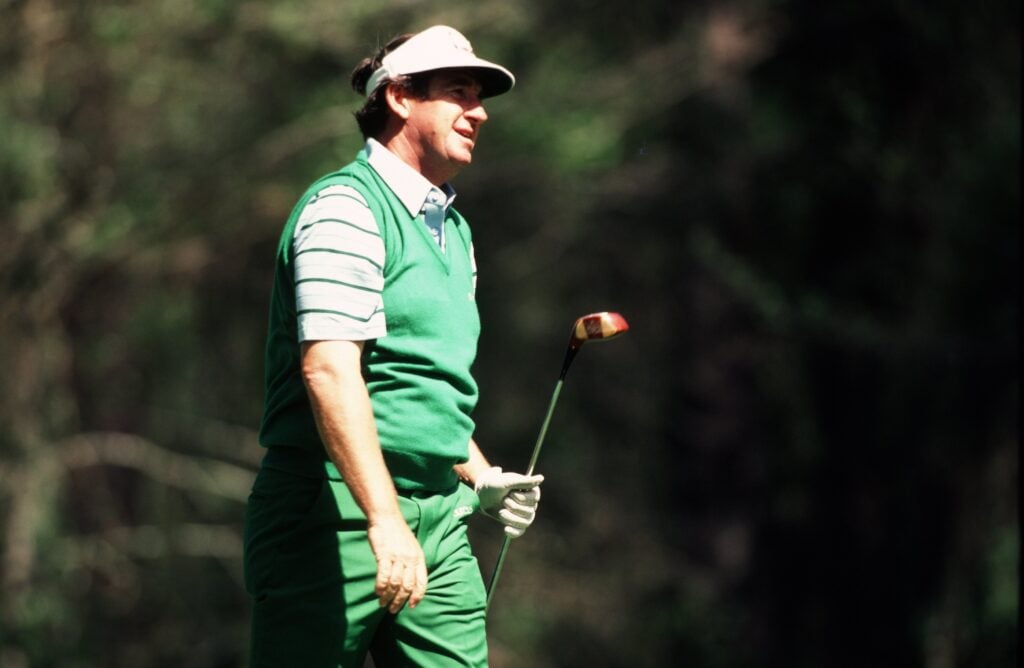
Only seven players have multiple Players’ Championship titles, and only Nicklaus has won the event three times. So if Jack never existed, J.C. Snead would have become one of only seven players to win this iconic tournament twice, sharing the record with the likes of McIlroy and Woods.
And with two Players’ Championships and 10 PGA Tour wins, he’s got a very strong argument to be inducted into the World Golf Hall of Fame, especially as the nephew of Sam Snead.
Instead, his story is one of near misses, which also includes second-place finishes at the 1973 Masters and the 1978 US Open.
Jack Nicklaus saved the PGA Tour
One of the biggest butterfly effects of Jack not existing would be on the PGA Tour, as the 1968 split might never have happened.
Professional golfers used to essentially be employees of the PGA of America before Nicklaus helped stage a coup.
In 1968, he and Palmer led a players’ revolt to gain more control over their schedules and prize money. While Palmer was the king, both men were vital in this movement.
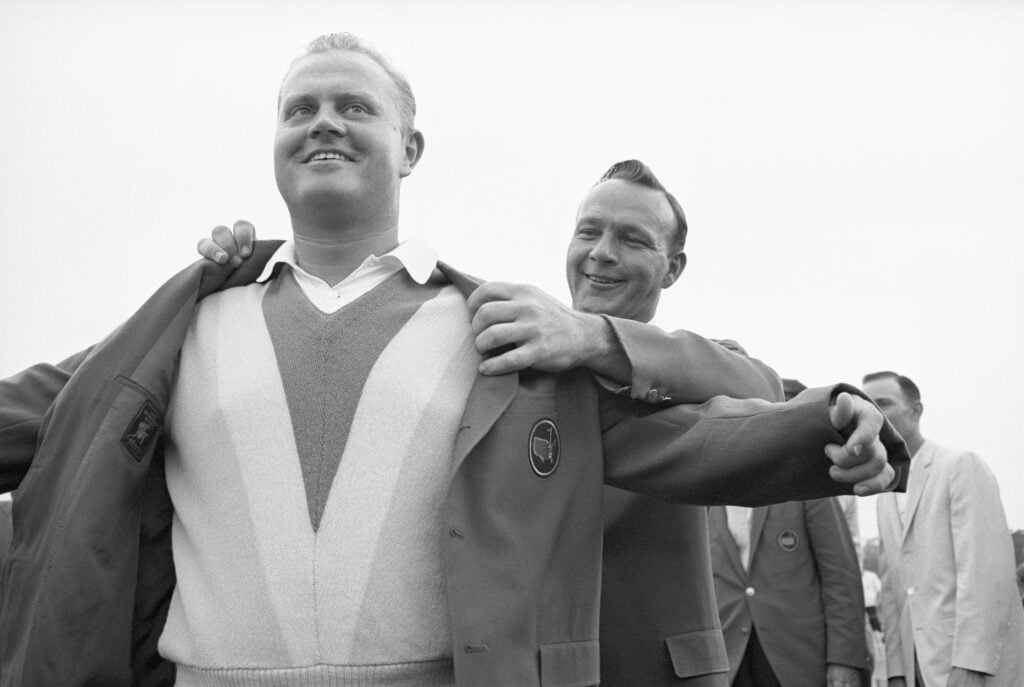
Without their combined leverage, the breakaway might have failed, leaving the professional tour as a secondary interest of the PGA of America rather than the multi-billion-dollar independent entity that it is today.
How removing Jack Nicklaus destroys the Ryder Cup
It is no exaggeration to say that without Nicklaus, the Ryder Cup doesn’t exist. By the mid-1970s, the Ryder Cup was dying.
The United States was so dominant against Great Britain and Ireland that these matches had become predictable and boring. Interest was cratering and sponsors were thinning out.
In 1977, Nicklaus approached the Earl of Derby, then the president of the Professional Golfers Association, and suggested expanding the GB&I team to include players from continental Europe.
And his advice was taken on board. This change was implemented in 1979, allowing legends like Seve Ballesteros and Bernhard Langer to join the fray. Without Nicklaus’ suggestion, the European team as we know it never would have happened, and the event likely would have dissolved due to a lack of competitive parity.
And beyond the creation of Team Europe, Nicklaus is inadvertently responsible for turning Europe into the powerhouse that it is today. The 1987 Ryder Cup was hosted at Jack’s house, Muirfield Village, and it was a groundbreaking event for Europe. It was the very first time they beat Team USA in the States.
Predict who the Ryder Cup captains will be in 2027 🤔

Because Nicklaus was hosting captain, that loss carried a massive weight that validated Europe as a legitimate powerhouse that could contend with their rivals from across the pond.
Without Jack’s stature backing that event, the European victory might not have carried the same changing-of-the-guard prestige, which has allowed the team to become the dominant force in the competition over the last quarter-century.
So without Nicklaus, the Ryder Cup likely remains a stale, lopsided exhibition between the USA and a struggling GB&I squad.
It’s entirely possible that these matches would have been discontinued in the 90s, or at the very least, they wouldn’t be the global spectacle that takes over the sporting world every two years.
Why hundreds of golf courses are lost without Jack Nicklaus
If Nicklaus had never existed, the landscape of global golf would be physically different. After his career, he took to designing golf courses, and his design firm, Nicklaus Design, has produced over 425 courses in 45 countries.
Without him, we lose not just specific holes but entire styles of modern architecture and the commercial viability of golf in several regions.
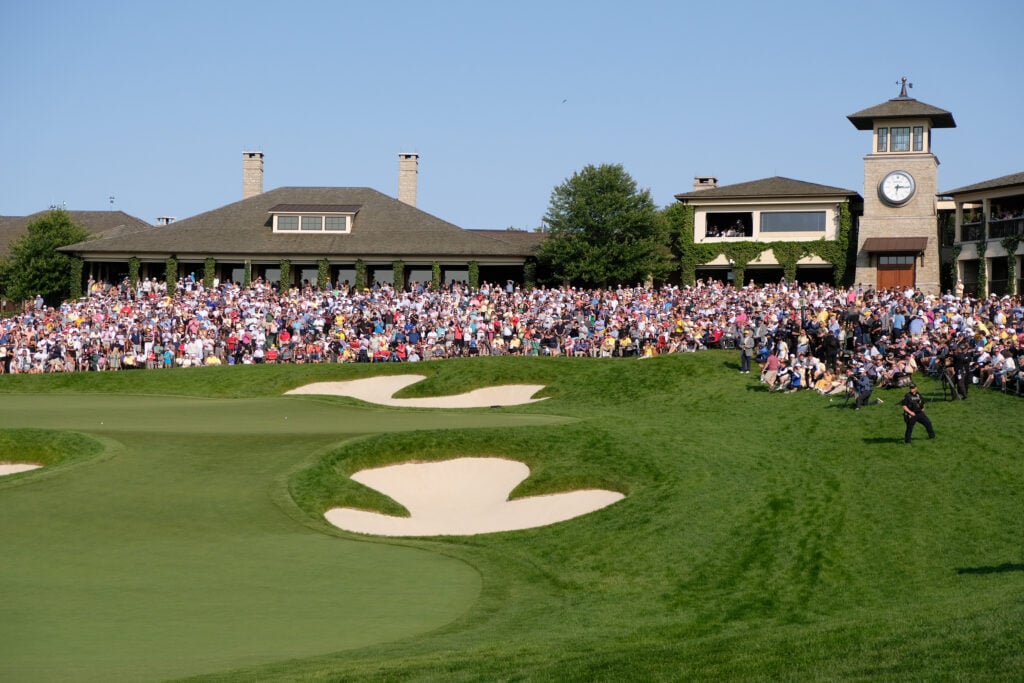
Muirfield Village Golf Club, Harbour Town Golf Links, Valhalla Golf Club, Glen Abbey Golf Club, PGA National, and many, many more are either completely different or do not exist without Nicklaus’ touch. And his philosophy would be missing too.
Nicklaus famously designed courses that favoured his ball flight. Without him, we might have seen far fewer strategic layouts that rewarded the specific high-trajectory game that modern pros now use.
Golf history unravels without Jack Nicklaus
When we look back at the history of golf, we often see it as a straight line of greatness.
From Bobby Jones, to Hogan, to Palmer, to Nicklaus, then to Woods, and to Scottie Scheffler. But as we’ve seen today, if you pull the golden bear out of that timeline, the entire tapestry of the sport unravels. The record books would be unrecognisable.
Crampton would be a major icon, J.C. Snead would be a hall of famer, and the first Japanese major winner would have been crowned 40 years earlier. But it’s more than just the stats.
Without Nicklaus, the Ryder Cup might have withered into a historical footnote, and the PGA Tour might still be a struggling subset of a teaching organisation. And hundreds of the world’s most iconic landscapes, from Muirfield Village to Valhalla, would simply be empty fields.
Perhaps the greatest loss, however, wouldn’t be the trophies or the courses, but the inspiration. Nicklaus didn’t just win; he set the standard for how to win. He was the blueprint for the modern professional.
He inspired Woods to put a poster on his bedroom wall and chase a ghost for two decades. He paved the way for Greg Norman’s aggressive dominance and Phil Mickelson’s longevity.
Even today, every young player who steps onto the tee at a Nicklaus design course is walking in the footsteps of a man who transformed a game into a global empire. Jack Nicklaus didn’t just play golf; he built the world that golf lives in today.
And while many players benefited from his absence in this scenario, the sport itself would be immeasurably poorer without him.
Receive exclusive golf news and updates twice a week to your mailbox