
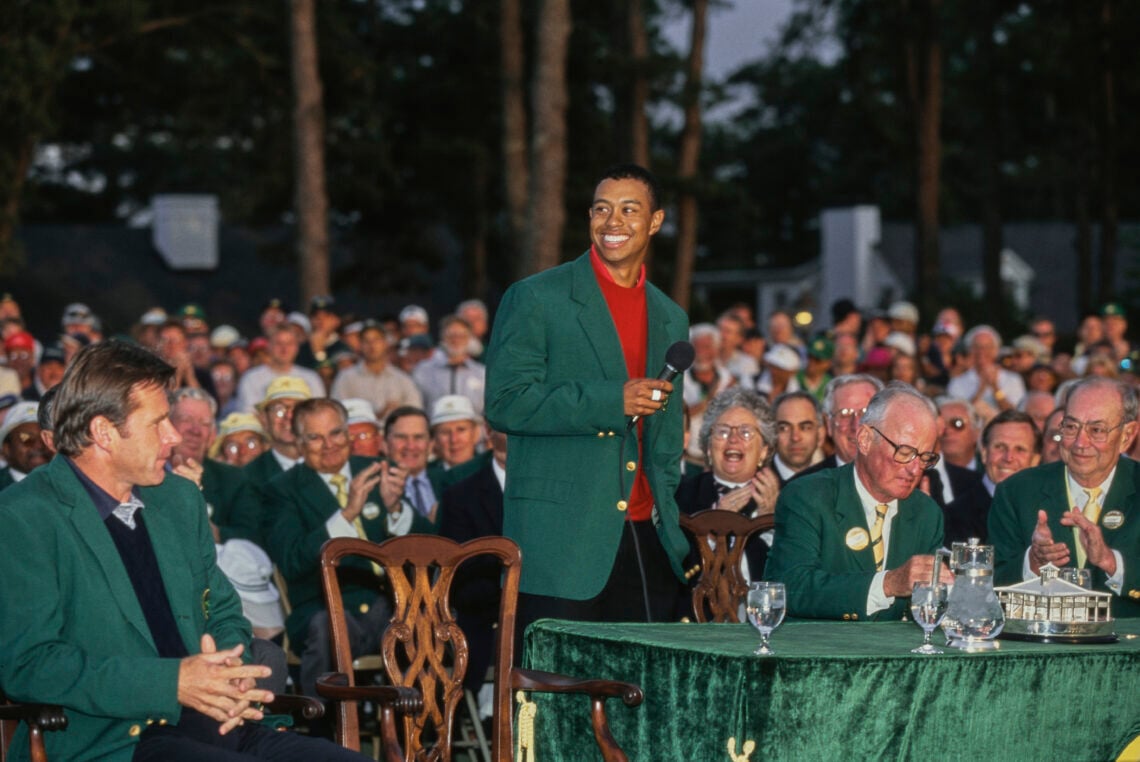

No one has impacted The Masters quite like Tiger Woods.
From the moment he set foot on the hallowed turf, Woods grabbed this legendary golf course by the scruff of its neck and contorted it to his will.
In 1997, Woods tore up the record books at The Masters. He finished a record 18 under par, winning by 12 strokes over Tom Kite, the largest winning margin in the tournament’s history. Over 72 holes, he didn’t three-putt once, and going into Sunday, it wasn’t a case of if he’d win, but how many he’d win by.
This performance was a turning point in The Masters’ history. A reality check for this event steeped in traditions, a warning that it needed to change, or become a victim to progress, as so many other historic venues have since.
Woods didn’t just win The Masters; he shook the foundation on which it was built. Here are the five ways in which Woods’ 1997 win changed the event forever.
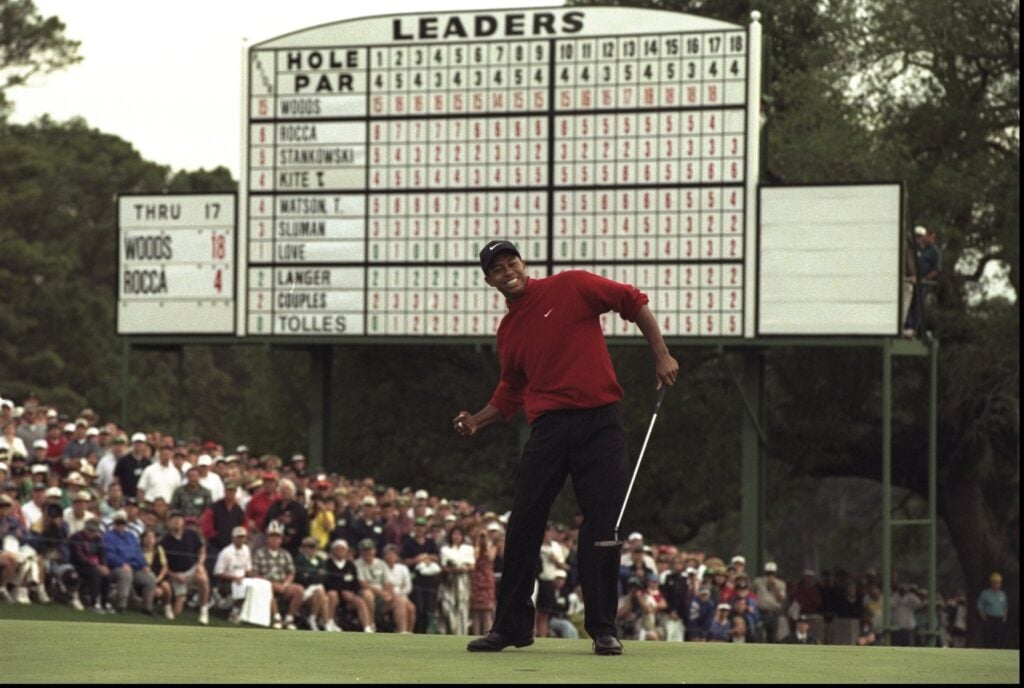
1. Tiger proofing
The most jaw-dropping part of Woods’ 1997 win was the way he overpowered the golf course in a way that wasn’t supposed to be possible. This was supposed to be a strategic challenge, which required course management and shot shaping.
But when Woods hit driver and wedge into the par-5 15th hole, he changed the game. Prior to 1997, Augusta National relied on its lightning-fast greens and strategic bunkering to protect par. Woods rendered those defences obsolete.
So Augusta National chairman Hootie Johnson began a series of renovations in 2002 known as “Tiger-proofing”. He brought in architect Tom Fazio to redesign the course, and a key part of that was adding distance.
They added hundreds of yards to the course to combat Tiger, creating the course we see today.
Who is the biggest winner if Tiger Woods never existed?
At the par-five 13th, Woods hit a driver and an 8-iron into this green. To force a risk-reward decision, the tee was moved back multiple times, most recently in 2023, adding 35 yards to bring it to 545 yards. This requires a 300-yard carry just to see the green around the dogleg.
The par-five 15th was once a green Woods could reach with a driver and a pitching wedge. It was lengthened to 550 yards. In 2022, after further lengthening, the field recorded zero eagles for the first time in decades.
The par-four seventh saw the most dramatic transformation. In 1997, it was a 360-yard drive-and-pitch hole. It was lengthened by 40 yards in 2002 and another 40 yards in 2006, bringing it to 450 yards. It went from the sixth easiest hole to one of the most difficult.
The course has now grown over 600 yards since 1997.
2. The Second Cut
Before these Tiger-proofing changes, Augusta National was famous for having no rough. It was wall-to-wall short grass, allowing players to recover from wayward shots if they had the skill.
But that allowed Woods to blast drives into neighbouring fairways and still have a clear shot at the green, with no real punishment. If they wanted to avoid another 18 under showing, there had to be a downside to missing the fairway.
So two years later, in 1999, Augusta introduced the second cut. They added 1.3 inches of height to the grass off the side of the fairway, not a brutal punishment like we saw at Oakmont for last year’s US Open, but enough to put it in players’ heads.
It was a fundamental shift in the course’s aesthetic and strategy, designed to reward accuracy off the tee.
3. Narrowing the field of play
To further combat Woods’ length, the club planted hundreds of trees to tighten the landing zones. Specifically, they added Mackenzie pines along the left side of the 11th hole and the right side of the 15th and 17th. ‘
This eliminated the so-called “Tiger lines” he had taken in 1997, which no other players had access to. They forced players to play down the middle, as Bobby Jones and the creators of Augusta intended.
What is your favourite moment from Tiger Woods’ career?

And in addition to the tees, fairway bunkers on holes like one, eight and 18, which all gave Rory McIlroy trouble last year, were reshaped and moved further down the fairway to sit exactly in the landing zone of players like Woods.
Ironically, you can argue that this Tiger-proofing actually helped Woods. By making the course longer and harder, the club eliminated shorter hitters from contention, leaving only a handful of elite power players, like Tiger, capable of winning.
So maybe McIlroy has Woods to thank for his win last year.
4 . The Tiger bump
Before 1997, The Masters was a prestigious, somewhat insular event. Woods’ win turned it into a global phenomenon. The 1997 Masters pulled a 14.1 Nielsen rating, which remains the highest-rated golf telecast in history.
Suddenly, the tournament became the hottest ticket in sports, and the Green Jacket became the most recognisable symbol in the game.
It allowed The Masters to maintain its unique, limited commercial broadcast style because the demand from sponsors was so high that they could charge a premium for almost no airtime.
In 1997, the total purse for The Masters was $2.7 million. By 2025, it had soared to over $20 million. Sponsors flooded the game because Woods brought eyes that had never watched golf before.
The Masters was huge before Woods, but in ‘97 he took it to a new stratosphere.
5. Cultural Diversification of Augusta National
Augusta National has a complicated, troubled history regarding race.
One of its founders, Clifford Roberts, once said: “As long as I’m alive, all the golfers will be white, and all the caddies will be black”.
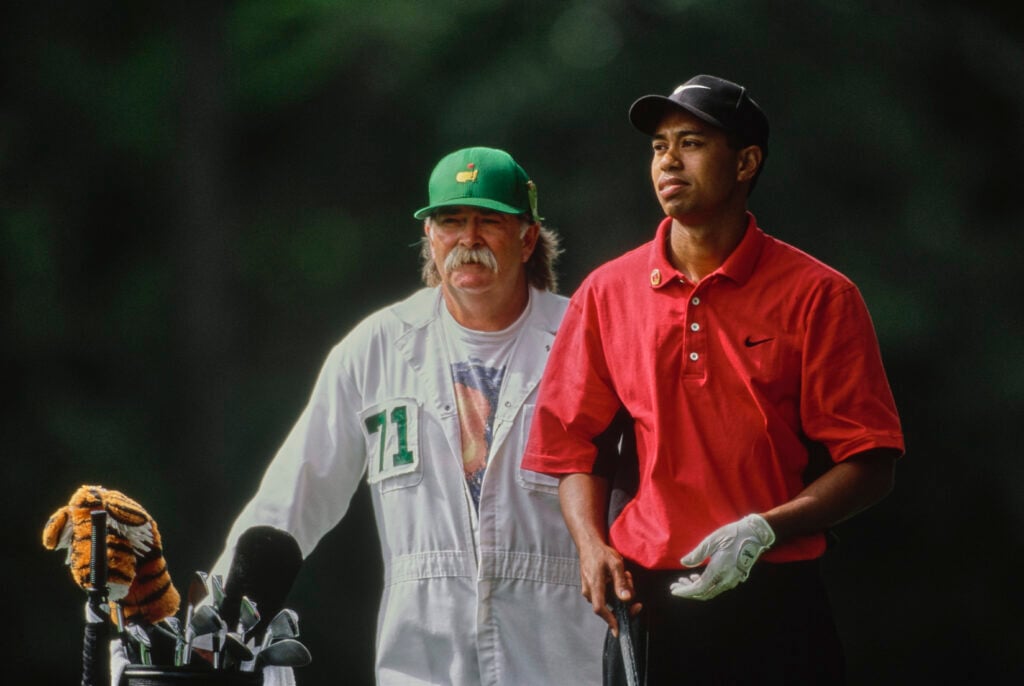
For most of its existence, Augusta National had been an exclusive symbol of golf’s Southern roots. White members, white players, and exclusively hiring black caddies.
The club didn’t admit its first black member until 1990, when Ron Townsend was invited to the club just seven years before Woods’ win.
In 1997, Woods became the first person of colour to win The Masters, so having the Green Jacket placed on his shoulders was symbolic. The optics and the pressure generated by the win forced a modernisation of Augusta National’s culture and its role in the global game.
The weight of Woods’ legacy eventually led the club to more formally reckon with its past, but it still took a long, long time.
In 2020, 23 years after Woods’ win, Augusta National announced it would honour Lee Elder (the first Black man to play in The Masters) by making him an Honorary Starter alongside Jack Nicklaus and Gary Player.
They also established the Lee Elder Scholarships at Paine College, a local Historically Black College and University.
But let’s not act like Woods’ win eradicated all of these issues. 1979 champion Fuzzy Zoeller said, “Tell him not to serve fried chicken and collard greens” after Woods’ ‘97 win.
It was a stark reminder that no matter how much Woods’ win helped to bring Augusta into the future, some minds were stuck in a much darker past. And we still have a long way to go today.
Receive exclusive golf news and updates twice a week to your mailbox